Categories
Uncategorized

Five Financial New Year’s Resolutions for 2015

Great simple tips for your Financial KRA in 2015

Jennifer Carole's avatarFinancial Engines

Happy New Year Hanging Baubles Blue Bokeh Beautiful 3D

With a new year comes the promise of big changes, and one of the most common resolutions is to save more. But big changes start with small decisions.

Here are five ways you can create good financial habits in 2015:

View original post 272 more words

Categories
Uncategorized

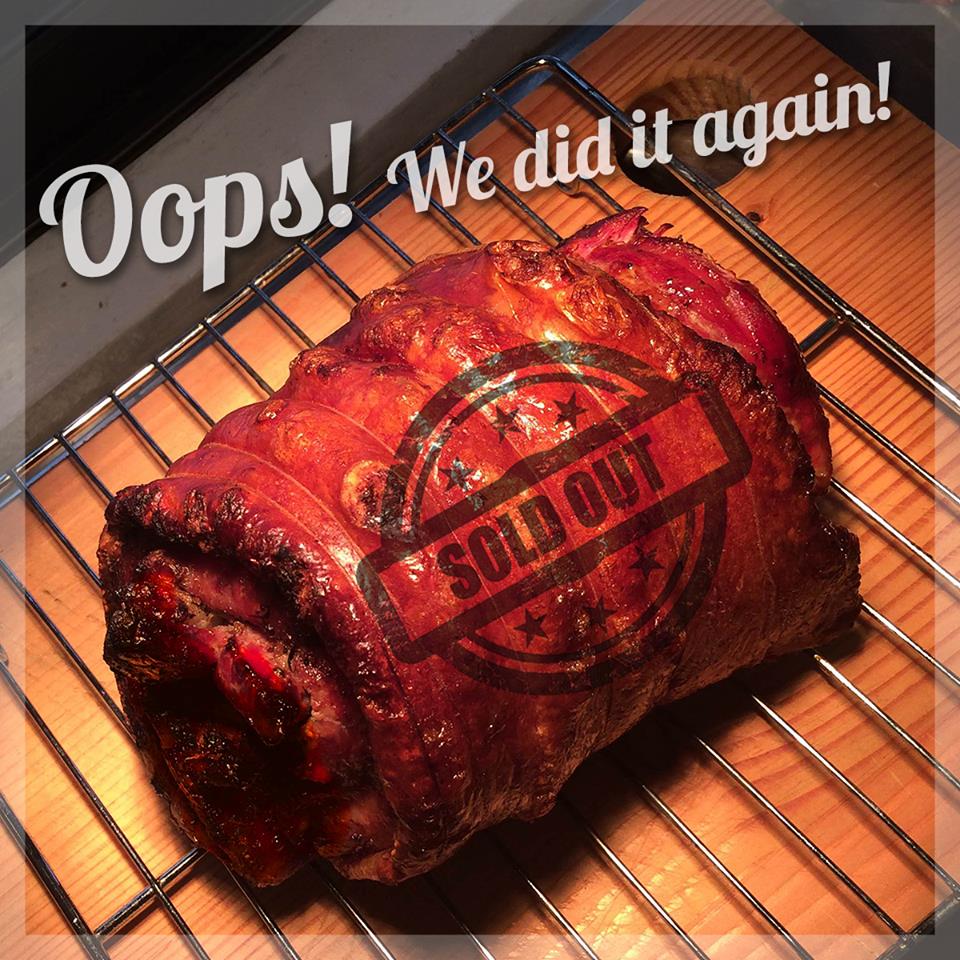
Releasing the Kraken of Cracklings and Why Bai’s Boneless Lechon Belly is Worth Writing Home About

Craving for Bai’s Lechon Belly. Well maybe this weekend?

johnbaybay's avatarJohn Walter Bay

IMG_4290Reeling in from the holidays where the obvious gain in girth remain as evidence, one has to say that some calories were worth more time than others. Christmas is the longest holiday in the Philippines starting off in September and ending with the celebration of 3-Kings in January. There’s just too much indulgence with comfort food that we could actually remain comfortable with.

In extreme cases over the holidays, I shared the table with an old friend who I noted was staying away from the usual indulgence of food and alcohol only to reveal that he had a mild stroke a few weeks prior. Our appetite for food which is amplified along the spirit of festivities could definitely lead us to our end. However this plethora of rich food also brings with it a certain amount of distaste for it. Filipino food during the holidays seem to be biased towards…

View original post 1,017 more words

Categories
Uncategorized

Photojournalism Daily: Jan. 8, 2015

Categories
Uncategorized

Should I Eat Whole-Wheat Pasta?

Categories
Uncategorized

Getting the Best out of the Worst! 4-Ways You Can Make The Best Out of the New Year!

johnbaybay's avatarJohn Walter Bay

2014 has been marked with some of the worst disasters we have seen in the region’s history. Media was abuzz and rightly so. Indeed we do not even have to look very far to appreciate the disaster of Malaysian Airlines Flights’ MH 17 and MH 370. These were disasters that are likened to a lightning striking twice in the same place within the same year. These unfortunate occurrences do prove that the worst things can happen not only once, but twice! Shortly after, just before the end of the year, the airline disaster of Air Asia QZ8501 gripped us! Lives were lost, families were affected and eventually business and everyone is affected.

On a lighter note, the year also brought about the shocking news that Hello Kitty is not actually a Cat; Despite being a Kitty! The news had taken two generations of people aghast with those who always thought…

View original post 1,036 more words

Categories
Uncategorized

Sorry, But Media Coverage of Pope Francis is Papal Bull

Categories
Uncategorized

Human, Take Me To Your Leader! A Human Sigma Perspective of Leadership

John Walter Baybay
Originally Published in 4.19.14 The Star Malaysia

In a previous article called “Leadership in the Millennial Age of Execution, I have said that the era of the 80’s and 90’s visionary is leaders have started to ebb away. During Apple’s turn over to Tim Cook, the market and the industry reacted with quivers of ambiguity. The public is often looking towards a venerated character on to which they could latch on. This has always been the paradigm of leadership. We see it in Hollywood and we see them in reality shows. In alien movies, the leader takes the sole responsibility for speaking and deciding for the rest of humanity, sometimes in very sacrificial scenarios. The funny thing is that they never seem to land in Russia, China or India!

We’ve idolized the characters of Jack Welch, Tony Fernandes and even Donald Trump! What will happen when they’re gone? Have you ever considered that the closest thing that you have as a leader is your immediate boss? If you haven’t figured that out yet, then “You’re fired!”

Apple’s Tim Cook, being the competent manager he is, has never risen to the same levels of visionary charisma as Steve Jobs. He is just a different person. That does not mean that he is an insufficient leader. There seems to be a notion that managers are different from leaders but the truth of the matter is that leaders are more accessible than you think. We simply have to change our notions on what they are supposed to look like. Yes, if your boss has the power to fire you, he is your leader. What about the man or woman tasked to lead a project, is he not a leader as well? Of course he is! According to John Maxwell, “leadership is influence, no more, no less”.
This influence extends far beyond the realms of ethics, morality and principles. In the previous article I mentioned leaders must use their influence to garner resources (money, physical assets and human resources) to get the job done. Many times, you do not have to go as far as the CEO to be able make things move. Apart from the romantic notions, leaders have their more accessible and practical uses. This is the supply side of leadership.
On the demand side, we must appreciate that our expectations of leadership has a strong human perspective. Leaders and the people they lead are humans. While this may be stating the obvious, we need to realize that emotions define the human experience and so affects the way we look at our leaders and the way we latch on to them.

In John Fleming and Jim Asplund’s book “Human Sigma”, they defined a customer and brand experience essentially as an emotional experience with progressive levels of engagement called the “Four Dimensions of Emotional Attachment”. While the mental model was used in relation to employee and customer engagement, the same is true in the ways we look at leaders. Leaders also need to look at their employees as internal customers and ultimately, consumers of their leadership. The model progresses from Confidence, Integrity, Pride and Passion under the following description with some paraphrasing for our example.

CONFIDENCE: Always delivers on promise. Name I could trust
INTEGRITY: Fair resolution to any problems. Always treats me fairly
PRIDE: Treats me with respect. I feel proud to be a customer or employee
PASSION: I can’t imagine a world without this Perfect Company for people like me.

With the above example we could see how these human dimension could frame an emotional perception over brands and even our leaders. Developing a leadership brand could be drawn along the same progression from confidence to passion. With this framework, it is not difficult to understand how some leaders have such strong levels of following. This can only be attributed to the progressing levels of emotional engagement and attachment.
Conversely, we can also see that a failure to engage your employees as a leader, can lead to stale or waning influence over behavior. Behavior determines your team’s output and effectiveness. Employees and their emotions cannot be managed exclusively from each other. We work in a human environment with behaviors that are driven for the most part by emotion.
There is more to charismatic leadership than what meets the eye. Do you have a leadership brand that your employees or teammates can trust? Are they confident in your leadership approach? Are you delivering consistently on your promise as a leader? Use the Human Sigma as a model and take it step by step.

Categories
Uncategorized

Leadership in the Millennial Age of Execution

Have you ever gone to a motivational seminar where you left the halls charged and motivated to slay your next day only to find that when you get there, you actually don’t know what to do next? I’ve said it before. I’ve heard someone speak. I’ve seen a bunch of TED-X videos and said: “I am so inspired and motivated! Now what next?” Where is the take away? Leaders Wanted! Please!

The truth of the matter is that as much as we have these great learning events that expose us to charismatic and inspiring leaders, we simply cannot bring them back home to talk to our parents to convince them to support your strategic shift in careers. Unless you’re paying these speakers to talk to your boss for an hour on how to become a better leader (not that he would appreciate it), then perhaps you need to come to grips with reality. There’s a lot of work to do. You need to tell yourself: “Get Over it and Get it done!” Let’s face it; if you’re feeling the pressure and cannot seem to gather the strength and motivation to make it over that hill, then perhaps you do need a leader.

Leadership however is not what it used to be. Gone are the days of charismatic visionary and motivational leaders. According to a John Hopkins School of Education the new millennium has pronounced a paradigm shift on how we look at leadership. The Visionary leaders of the 80’s and 90’s have seemed to have a muted importance in the millennial workplace. Not that “Vision” has disappeared, but the importance has shifted in favor of “Execution”.

The demand on leadership has also expanded its dimensions. The working environment is marked with so much diversity that a leader needs to have both a deep and broad understanding of his/her working environment. The new workplace emphasizes on gender sensitivity, race, culture, religion, age, current events, and maybe even music. Leaders need to work within a greater context of complex social issues as everyone brings a piece of it into the working environment. It influences behavior, work outputs, and quality. It is said that during the golden age of the 50’s it was enough to be “competent” (IQ) but in this millennial age leaders also need a high level of Emotional Quotient (EQ). A leader needs to be emotionally strong to handle complex situations and also emotionally intelligent enough to manage the feelings of others.

Beyond the issue of EQ however, is a functional realm that focuses on implementation. With such, functional skills such as planning, resourcing, controlling, and documenting tend to have great levels of importance. There is a need for a leader/manager who has a meticulous eye for process management. A leader needs to be able to identify constraints, anticipate delays and creatively navigate immediate changes in course and direction. Knowledge, Skills and Experience counts! Leaders need to go to where bottlenecks are and have the knowledge to fix them. In a project driven enterprise as we have today, leaders need to have an understanding of the language and protocol of project management. It is not enough to cast a vision and expect people to buy-in expecting them to execute automatically; sometimes a leader also needs to bring his/her people through a collaborative process of gathering a situational appraisal, brainstorming on creative options and following-through with a concrete action plan. This takes both a diagnostic mindset and knowledge on the use of analytic and strategic development tools. It isn’t enough to cast a Big Hairy Audacious Goal (BHAG) and say “Let’s Do It!” People need to know why and people would appreciate if a leader could go to the level and show them “How”. If you find yourself telling someone how to do his or her job without you knowing “how”, you will be in a lot of trouble. Credibility along with the trust that comes with it goes down the drain.

The challenge for the leader in the millennium is that we are living in an environment where every answer is just a click away. We live in a world of immediacy and access. Speed and convenience are no longer luxuries, they are expected. Technology has shaped the way we work, communicate, and think. Information is instantaneous. Gone are the days when we had to go to card catalog in a library to find the book that you need. Research took days, piles of books and red eyes zipping through miles of microfiches. The screen generation might not know what I am talking about, as research to most would be a matter of clicking the “search” button.

The phenomenon of immediacy also places similar demands on leaders. This gives a whole new meaning to the old term “Management by Walking Around” (MBWA). Leaders need to be accessible and teach. Leaders need to be a great source of knowledge and information. Just as they would love to see a YouTube video on how to do a particular task, it would be even better if a leader could demonstrate how things are done with a “hands-on” demonstration. This is not a negation of today’s workforce. While leaders are investing the time to teach, coach and mentor, they are also transferring skills and sometimes values into the workplace. Effective leaders of today invest heaps of praise and acknowledgment to their teammates, as they know it pays dividends in productivity. The role of leaders is more holistic than the old paradigms. A leader is that wise indispensable sage that empowers people in the organization. This is how things “get done” in today’s workplace.

The misconception about “execution” is that it is based on “hard skills”. The truth is that “execution” requires both EQ and functional competence from a leader. Getting things done requires both politics and skills. While you may have the “planning” tightly screwed down, you may find that it also takes a bit of politics to get your projects prioritized and resourced. You may be able to command a good and engaging presentation, but you may also need the data to back up your arguments. You might have all the data on hand, but many times you need a team behind you to back it up.

Leadership in the age of execution requires the ability to move laterally and vertically to get things done. A leader needs to have the integrity to exercise his/her influence in every level of the organization, even if it takes someone else to do it. It is not enough to have a big picture; a leader must be able to see both the forest and the trees. Today’s work environment calls for leaders with flexible roles where one can be a strategic leader in one situation and a field marshal on another, taking personal charge of a project with a team. Effective leaders know when to coach and when to mentor and actually know the difference between them. They know when to direct and they know when to facilitate. They know that leadership is less about talking and more about doing. They navigate through a whole slew of issues and eat them for breakfast in a meeting or over an afternoon coffee.

Today’s effective leader knows that “the task” is way beyond self and has no time looking down. The mission is more than the leader himself; it is more than what his lifetime could afford. Excellent leaders are always scouting around screening for talent and grit. They are always looking around searching for opportunities to work with the next set of leaders that will get the job done, someone to whom they could pass on the baton. That is the Leader of the Millennial Age of Execution. It could be you or the person next to you.
For all my mentors of the past, this one is for you: THANK YOU!!

Categories
Uncategorized

Clichéd Critics’ Critics Criticisms and Other Yolanda Do’s and Don’ts

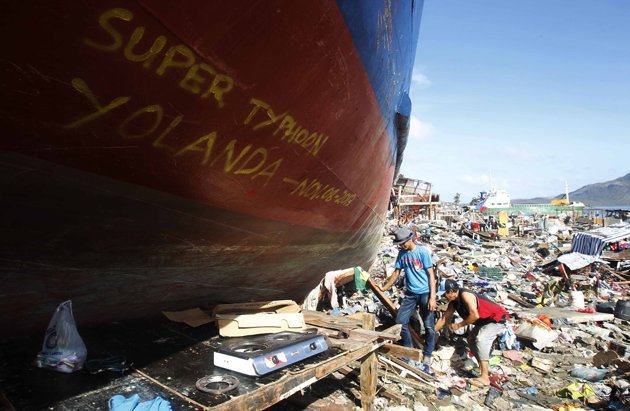
Sunday November 10, 2013 was Day 1 after Yolanda (International Name Haiyan) hit the Philippines with a cataclysmic super typhoon that decimated central Philippines especially Tacloban. The following day had already prompted my local church with a special offering for the victims. Most attendees including myself gladly obliged without much hesitation in opening their checkbooks to help their fellow kababayans in Leyte. At that point however, many still haven’t a full appraisal of the damage caused by the super cyclone. Nevertheless, we went back home trying to assess whether or not we could manage to finds some surplus clothing on top of the money we have already given. It comes to surprise, that we might not find too many old clothes in our closets. The country has seen so many storms and floods that most of our drawers’ contents have been “right-sized”.

It wasn’t until actual footage came in that a lot of us came to a full appreciation to the extent of damage that Yolanda caused. Previous social-media videos gave clips of unprecedented winds and shearing damage but the calm after the storm was even worse. Structures have been pulverized. Bodies were seen scattered behind reporters; people of all stature were left without house and home. The devastation was inconceivable. Even with previous storms, the country was left unprepared by the scale of Yolanda’s damage. It was clear that we needed to act fast though at that point, there were already criticisms that the government hasn’t acted fast enough. There were allegations that PNoy had tried to downplay the scale of damage to the international press. There were annoyingly comical clips of Mar Roxas directing traffic and there were unjustified fingers pointing to incapacity of the local government. They themselves were rendered “incapacitated” due to the magnitude of the disaster. While the rest of the world poured in their sympathies and support into Tacloban, the President denies tact and mercy to its Mayor who by default and by choice represents the devastated city.

With eyes on the victims, some of our friends in social media had asked for a ceasefire from criticism (One from my former boss Ms. Feliece Yeban). While I heeded to this call in propriety, the critics’ critics seem unrelenting with messages saying something to the effect of: “Well if you were the President, do you think you could’ve done a better job?” Have you heard this trite remark? “Well, perhaps if your have a better suggestion, maybe you could enlighten us. After all you seem so much smarter than all of us!” My absolute favorite has got to be: “Instead of criticizing what’s wrong with the relief effort, why don’t you help instead? Be constructive instead of divisive! Stop criticizing our government!” With these sneering and self-righteous remarks, you have to ask who it is that is being divisive.

By Day 4, I found myself instantly recruited to load relief goods into privately marshaled Land Rovers, delivery trucks and personal SUVs to the airport and back. In the background there was a massive operation in a Christian Church in Festival Mall where the assembly area was converted into a sorting and packing area with hundreds of volunteers. Private planes were being used to transport items to other areas such as Palawan. A bus company volunteered to provide ground transportation a Bike Shop provided bicycles and off-road vehicles from Muntinlupa to Tacloban and local logistics company provided the warehousing to keep the logistics smooth “free of charge”. (I can attest to who they are as witnessed, and can release this information upon consent). They are not the Epal types, just God loving citizens.

We have learned from the natural crises of the past but nobody could be 100% prepared for a disaster of this magnitude. While we could make ourselves feel better by riding along the positive waves of “neo-nationalism” and “keyboard heroics or bayanihan” and attacking those who are critically frustrated from the news they are getting on the ground. I have a simple message of Yolanda DOs and DON’Ts. (The Dos having been adapted from our Church’s mission Mantra of Pray, Give, Go!)

DO:
Pray – or if not, spare a thought for them. Without being religious or spiritual, thinking of other people’s needs first sets a good precedent to your succeeding actions, decisions and behavior. Thinking about them shapes the economic decision between getting a bottle of wine or instead putting a check in an envelope this Sunday for the victims.
Open up your checkbook or say it in cash! Nothing moves faster and longer in these times of crisis as good as money. Money needs no sorting operation and I believe it would be appreciated more than the information that you used to wear a size 42. Reserve that for you “Before” picture at the gym and there isn’t much use for your bacon gartered underwear either. Believe me, some people will sort through your old clothes.
Go! You don’t have to go to ground zero. As a matter of fact, you don’t have to go too far. A local church, Villamor or perhaps ahem a local NGO (most of which don’t have a bad rep for being bogus) would appreciate your help. Lend them your thoughts but more so, lend them a hand.

DON’T:
Don’t send stuff that you can’t use yourself. The same goes for old Garfield plushy that you stick to the back window of your car. I already mentioned clothes earlier. Please don’t send your old underwear and your 80’s neon ski-jacket. You’re not being generous when you send junk.
Don’t be “unheroic” by posting messages that you’re torn between getting a KTM or an Aprilia. You’re not being heroic, you just being an @$$#0!%. Refrain from foodporn and posting your P350.00 ramen with a tall glass of Sapporo on the side. Enjoy these things in private!
Don’t be Cliché and Holier than Thou with your pseudo nationalistic sneering. If you’re criticizing the critics, aren’t you also a critic? (Perhaps on the opposite side of the fence and in who’s defense?)

You can be helpful and be critical at the same time. You can give with one hand and be discerning with the other. Criticism uncovers many of the bitter truths that society tends to hide. We move further ahead if we base it on the truth. It doesn’t take half a dimwit to see the logistical bottlenecks in the relief effort, but you have to be critical to see what they really are. No finger pointing here, I’ll just use my mouth after all that’s what still makes me Pinoy.

Categories
Uncategorized

Pork, Paybacks and Picnics

Pork, Paybacks and Picnics
John B.
8.27.13

Droves of tax-paying citizens flocked to Luneta and other public areas around the Philippines on Monday August 26, 2013 (coinciding with National Heroes Day) to protest the “Pork Barrel” scheme and allegations of corruption triggered by the recent exposure of P10-B Napoles Pork Barrel scam. The event was largely mobilized through the social media in recent days and resulted perhaps in a reasonably good show of force by concerned netizens. One of my companions Jp Fenix commented however that perhaps it shouldn’t have been dubbed the “One Million People March” with a risk that the event might not actually yield the targeted number. Perhaps it didn’t but perhaps it might be considered successful. I am waiting to see what happens in the next few days before I judge.

I was privileged to be in the company of seasoned reporters, who at first hand has witnessed and covered the Nation’s most significant democratic events in our history. While in the van, my companions were sharing field stories enriched with their personal takes on the events that shape our society today. As we came up to Plaza Ferguson in Ermita, the conversations toned down as we exited our van: Perhaps this from a sense of Déjà vu. The scene was very familiar, as not much from Ermita has really changed in decades.

We came up through the muddied fields leading to the Grandstand with open expectations though we were quite amused by the presence of a mixed group. There were the Hare Krishna, the KMU, lots of people on bicycles (a seemingly more organized force), and what we could guess as the online organizers of the march with their stage, big screen and entertainment. It was a mixed bag with a very open agenda loosely styled under the “Occupy Movement”. The agenda was very open and free flowing. Indeed with such a loose structure, those with their own distinct agendas were expected to take advantage. Standing from far away we might’ve witnessed the former Chief Justice Corona being booed as he exited. We were not sure if it was him. Jograd de la Torre made a comical rendition of Jesse J’s “Price Tag” and Jim Paredes sang an appropriate song though we thought he struggled a bit to find his voice in the beginning. So far those were the highlights of the morning. While it may seem uneventful, we should all be happy that nothing terribly wrong happened. It was peaceful and generally pleasant despite the constant punctuations of the somewhat comically awkward chant: “Oink, Oink, Oink, Oink!” This had me asking, OK what’s next?

Without the exciting drama we could at least see the “One Million People March” for what it is: A participative and democratic display of the people’s disdain over the pork-barrel issue. While pork was the common theme, I could not help but observe some of the later speakers’ attempt to steer the issue away from the government’s accountabilities. Statements such as: “We are not mad at the government, we are mad at corruption”, seem to be redirection messages planted by pro-administration speakers who were cordially given the floor. Would you have us believe that the rally isn’t about the pork? People have become too smart to see that they were not on the same side.

On the other hand there was perhaps an attempt by former CJ Corona to direct some support for him against the administration; an attempt that obviously failed. Other messages seemed a bit more “themed” along the pork issue however a clear direction as to what happens henceforth seem lacking. There were a number of suggestive voices but no clear and unified voice on how to move forward. Participative and democratic as it may be in “Occupy” fashion, the event showed no clear owners. This is perhaps is not a bad thing but also yields some rather ambiguous results. I believe the event to be a clear display of sentiment rather than purposed to make a strong demanding statement. We need to be clear in the type of results we want from government and how we want to see them happen. Let’s make clear statements rather than just expressing our sentiments. Beyond having our voices heard, lets be clearer with what we are actually trying to say. Do we want it supplemented, overhauled or merely repurposed? Are we calling for an immediate abolishment? If so, how are we to do it? These options were not clearly communicated during the march.

Déjà vu it wasn’t for my seasoned companions who have witnessed the EDSAs and the events that welled up to them. Clearly we have not reached a tipping point yet. Perhaps this could be the first among a series of other events? Perhaps it will progress? One thing is for sure for this writer, and this is the very reason why I went (beyond mere curiosity).

I believe that the Pork Barrel is flawed concept from the principle of keeping three separate, distinct and equal branches of government. The idea of having a presidential allotment that is distributed to lawmakers is wrong and corrupts the whole principle of checks and balances. The pork corrupts our democratic system by monetizing the flow of political capital. With much leant to the president by the local machinery during his campaign, much is owed in payback in the form of pork. I believe that it should be abolished. A dialogue between government and organized groups must quickly ensue to provide a clear roadmap to this demanded change. In my opinion The “Million People March” has little or nothing to do with Napoles and the P10-B scam, but rather more about the flawed, corruptible and ineffective system of discretionary allotments. While many would argue based on the merits of its design, the truth has been revealed that pork is often used to line the pockets of colluding perpetrators rather than being given to legitimate and deserving recipients. Can we really solve this systemic flaw by penalizing the NGOs (most of which could be legitimate) and other scapegoats? This crooked path must be straightened as promised but I am now starting to wonder if the administration might just be too politically indebted to do so. Let’s not allow them to do their pork paybacks with our money.

There are talks of another march in September 11 but until then I hope we could progress with a clearer strategy. Either way, I might be inclined to show up for the picnic.