Categories
Editorial Politics

Pork is Cheap in Bahana Republic

I seem to be part of the lucky few in my city where 15 out of 18 barangays are submerged in water after a continuous downpour of ‘Maring’. The great revelation in all of this is that floodwaters always have a way of bringing all things to the surface. It is a trite simile of our country’s real condition that always seems to be swept under the rug of glaring reports and soaring economic highlights. The brilliant lights of rising credit ratings caused by the showing of a faux veneer of good governance is now being washed away by the tides of reality. Our fellow Filipinos are literally waist deep in it as we speak. We are wading through the trash that we are forced to live with, a bitter reminder of who the ultimate victims are. Has the past three years all been a show or does the administration rather have us swallow the trash that’s being dished out at us everyday?

It is easy to surmise that the better of us are high and dry in their air-conditioned rooms overlooking the submerged neighborhoods where they do not live. They probably have the means to go grocery shopping with the kids and their yayas and bodyguards in their gas guzzling convoy of SUVs. They casually walk up to the VIP lanes in checkout counter paying for their carts loads not by cash nor by credit card, but by personal check! I’ve personally witnessed a former actress turned congresswoman (married to an actor turned senator) do this impressive stunt in plain sight not too long ago. No “wang-wangs” needed here! The simple wafting of their entourage splits the crowd as they are gracefully escorted with two rows of umbrellas back into their SUVs. This is the promised “Daan na Matuwid”, a leveling of paths for those in power, a presidential cladding for those who are closest to Malacañang. Three floods and three years later, not much has changed, people have just gotten angrier and we’re still waist-deep in floodwater! The poor and unemployed have gotten poorer, the filthy rich get even filthier and our politicians are getting even more enriched with pork around their bellies! Apparently it’s not only their bellies and wallets that are getting thicker, but their faces as well. They do it so well that perhaps they should have an accreditation for acting too! Pork is certainly cheap in the Philippines. P10B of it is just floating around in what my colleague Paul Farol calls: “The Bahana Republic”.

Beyond the obvious puns, the condition in the Philippines is no laughing matter especially to the President. His leadership and credibility is now seriously at the stakes! The specter of cronyism is being brought to light. The KKK, the oligopolies and the vested interests that seem to have a strong grip of influence upon our dear president are now being exposed. The credit ratings that we have tried to gain over the years is now in danger of slipping due to realizations of old oligopolistic structures at the economy’s core. The beneficiaries of PDAF who are seen close to the President and the bloating of its budget are showing the “Daan na Matuwid” as a charade! “Kung walang corrupt, walang mahirap”. Mr. President I believed you! Now is the time to rise up to the plate or else you have another flood coming on August 26 in Luneta!


Categories
Reviews

“Metro Manila” – (The Film): Anything but Cliché

To a jaded moviegoer who thinks he has seen it all, “Metro Manila” offers a compelling reason for viewers to revisit Philippine cinema. I was recently invited for the press screening of “Metro Manila” last Tuesday August 13, at “The Block” in SM North Edsa. “Metro Manila” was directed by the UK’s Academy Award nominee Sean Ellis whose recent renown came from other critically films such as “Cashback” and “The Broken”. The film stars Jake Macapagal, Althea Vega and John Arcilla to name a few. Prior to the press viewing the film has managed to bag the “Audience Award” in the 2013 Sundance Film Festival. With such credible accolades, expectations run high; especially for one who had to drive unexpectedly for 50 kilometers and back just to see the film.

The title and tagline: “Metro Manila” – Desperate Men Take Desperate Measures, trite and cliché as it may seem reveals very little about the film’s content. It may even be setting itself up for possible disappointment. The movie poster depicts the silhouette of a man wearing a Kevlar helmet, shotgun in one hand and metal case in the other. There is a backdrop of a woman (the obvious love interest). I thought I was about to see a Filipino action movie. While cliché seems to be the order of the day, here is another one: “Do not judge a book by its cover!”

The film begins with a situational for the characters’ beginnings under a tranquil and majestic visual landscape of the Rice Terraces. It starts in the highland rice farms of Banaue where the couple with their two children struggles to survive, only to be caught up in a vicious cycle of rural poverty. They make a move to the city with everything they have in hopes of better fortunes in Metro Manila. The decision is shortly followed by a series of unfortunate events. Starting with a stalled jeepney that foreshadows the rest of the film in poetic portrayal. While in the jeep over to Manila his daughter finds a shiny coin and hands it to his father; a symbol of luck and hope despite the difficult circumstances. The first few moments in the film almost seemed draggy and perhaps it was meant to be so. I asked myself: “Where is the writer / director going with this?” Upon the family’s arrival in Manila, the film changes its tempo to a choppy and frantic pace. The family desperately walks through the mad crowds of Quaipo’s Feast of Nazareno. The viewer is bombarded by a flurried chaotic congestion. It is visually overwhelming yet carefully premeditated. It is a visually eloquent film, stark and crisp to its brutal details. You could swear that the director is a photographer who also has mastery in the medium of “moving pictures”.

Beyond the visuals, we have a story well told. An innocent and unassuming provincial couple that is pushed into a hostile environment by circumstance makes for characters we can all sympathize with. To make a long story short without spoiling it (as there is great danger), the couple falls into a vicious cycle where the man as a last resort finds a job as an armed personnel for an armored vehicle and the woman out of desperation to feed her child is pushed into prostitution. While this may all seem quite typical, the other characters in the story do so well in making a simple scenario deep and complex (Credit to John Arcilla and Miles Canapi). With such naïve and unassuming characters played by Jake Macapagal and Althea Vega, it makes the viewer ask about people and their intentions. Are people generally good or evil? Is there any hope within the thick slurry of social degradation? Is there any redemption from the typical scenarios that ensnare the common man and woman in poverty? The story is rendered in indelicate rhetoric and delivery that punctuates the desperation with further insult and debasement. The viewer in his sympathy says prayers in breaths hoping for some breakthrough and relief from the bitter and naked realities of city life. While this is no action movie, the film spares no details in moments of brutal violence.

The story does however have its undulations of hope and happiness: enough for the viewers to press on with the characters. This however is interrupted by a thickening plot. There is an escalation of complex twists. The story was never predictable. It is progressively involving. While watching, I lost any sense of when and how it was going to end. I was clinging only to hope in honest desperation yet resolved in accepting the tragedies of reality. A tragedy it might have been at dismissal, but who am I to spoil it? Having seen the film, I could only urge the reader to unravel the clever plot by himself. The story is really that good.

To be devoid of the glare that comes with mainstream stardom is a good thing. It makes for more authentic and believable characters. Combined with skillful writing and directing, this makes for a very engaging and effective story that is progressively and absolutely engaging. With such dramatic performance these actors are worthy of even deeper respect. It is a film that does not sugarcoat poverty, as we would usually have it, but exposes its brutal and naked realities in visual and dramatic poetry. It is a story that is saturated with social relevance yet does not fail to engage its audience in crisp artistic drama. A copy of this film is making it to my shelf for posterity.

Categories
Life Management

“Fit for Work – 5 Ways Work is Killing You 4 Ways to Fight Back”

What is it about irony that makes it a more remarkable statement? Having returned after a month-long project in a land known for its greasy mamaks and 24 hour dining, I was shocked to find that I had actually lost 5 pounds where I thought I gained at least 10. The belief is that a corporate executive’s lifestyle is usually not a healthy one. These are attributed Five ways that work is killing you slowly and surely:

  • Stress and anxiety
  • Long work hours and lack of sleep
  • Physical inactivity
  • Unhealthy diet
  • Use of alcohol and tobacco

Besides the physical toll on the executive’s body, a poor work-life balance also affects relationships at work and at home. While some claim to separate work from personal issues, they’re obviously bringing the same person to the office and back home. With this vicious cycle it’s a mystery how one could stay effective at work or even at home. The most effective way of breaking a vicious cycle is to identify one or two strong leverage points that balance the system. Focus on things you can do something about immediately. In this case, focusing on changing physical activity and balancing your diet could result in surprisingly great amounts of progress over time and the other things mentioned may very well fall into place once you’ve set your priorities. Simply by watching what you eat and putting in two (2) hours of exercise a week could have positive effects in shorter amounts of time than you think.

While in abroad amidst the hustle and bustle of four meetings a day and sometimes working till 9, who has time to stay healthy? Surprisingly, I was able to do so by carrying out four simple strategies, most of which are based on tested time-management principles.
In my busiest of weeks, I was surprised to be able to burn off 2 hours during the weekday and another hour on Saturdays through a quick run through the park. This was accomplished simply by filling gaps in my schedules. The plethora of food choices in KL also allowed me to go on a primarily vegetarian diet (c/o the local Indian restaurant).

Here are four strategies that could help you get on track:

  1. Plot your fixed points: Plot all your meetings in your calendar including the tasks that you need to discharge during the week. Treat tasks as appointments. For example, if you believe preparing a report would take 2 hours, you should also plot it on your calendar to make sure you allocate enough time for getting important things done.
  2. Establish baselines: Know how much time and calories a type of exercise would take up. For example: running on a treadmill could consume 250 to 350 calories per 30 minutes. Other cardio exercises like spinning could do the same. Focus on cardio-vascular exercises if you are trying to lose or maintain weight.
  3. Divide up tasks when necessary (work-breakdown): Divide your body into 3 major sections sections: Legs and Glutes, Trunk (abs, obliques and lower-back), Chest and Upper back (lats) and Shoulders and Arms. Working out section, I found only takes about 15 minutes for a basic strength-building regimen.
  4. Fill in the gaps: Once you’ve plotted all of you’re appointment and tasks into you calendar, you will realize that you would have gaps between schedules such as a 30 to a 2 hour window between work commitments. Use this time wisely to try and burn off excess calories. I was able to burn off an average of 3 hours a week with this simple strategy.

Having a company gym is great benefit to employees as it allows them to stay healthy. But sometimes it only takes a pair of running shoes, some motivation and some body-weight exercises such as the one in this popular New York Times blog to keep fit. While it may seem that companies are on the giving side when they provide the means to exercise, recent studies have revealed that worker productivity goes up. According to a study, workers who have a regular exercise regimen have less sick-days and fewer charges to medical benefits. In a Focus Group Discussion of employees covered by the study, employees who regularly exercise say that their time-management and mental abilities have improved. They also reported a work performance boost of about 15%. Their abilities to cope with stress have also improved. Exercise generally makes for healthier, happier and productive employees.

There is also a strong link between fitness and career performance. Being physiologically fit enables an executive to stay focused, driven, committed and resilient. By subjecting your body to progressive physical overload, our bodies are more ready to adapt to stress and respond with more energy. Bringing this type of positive and confident dynamism into the workplace makes an executive a more effective leader who could lead by example. In a 2007 University of Georgia study of 1,300 executives earning more than $100,000.00, 75% of the executives interviewed said that good physical fitness is “critical for career success at the executive level” and that being overweight is a “serious career impediment”.

Perhaps you’re still on you way up to the corporate ladder but perhaps now would be the best time to start faking it until you finally make it. If you want to be an effective executive, you might as well start practicing. I’d rather say that everyone is “Fit for work”, but obviously I have to run!

Categories
Editorial Society

MMDA’s Proposed Ban and Bane

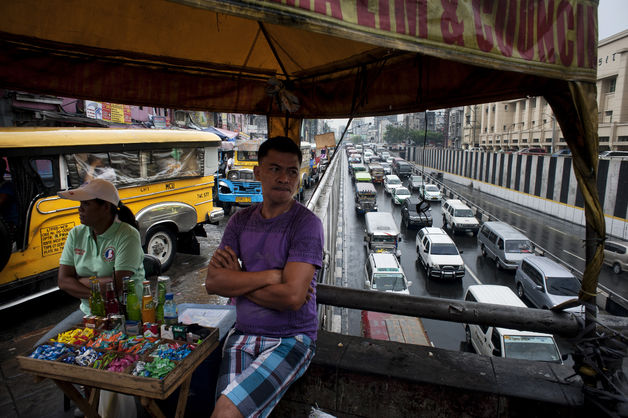
People are outraged by MMDA’s proposed number coding scheme that is set to ban vehicles plying EDSA for two days instead of one. While the movement seems like a legitimate effort to curb vehicle volume, perhaps the same has not been well thought and apparently costing the administration some points especially with the upcoming SONA. The poor timing does not come as a surprise as people have been well acquainted with the chairman’s pomposity made public in his recent displays in the “Hell’s Gate” issue. The truth of the matter is EDSA is a Hot Gate for motorists and is an expected choke point for Metro Manila’s motorists. While our chairman is obviously in denial of Metro Manila’s hellish conditions, anyone plying through Metro Manila’s main thoroughfares is no stranger to its pervasive lawlessness and displays of human misery. Corruption still prevails as well as the abuse of the strong versus the weak and helpless. In recent days netizens desperately tried to make their point by posting photos of buses holding up traffic at the expense of the common motorist. The problems are obvious however it seems like the middleclass is always expected to bear the weight of inconveniences and losses in productivity.

Early during the onset of the administration, the same middleclass that rallied in support of the “daan na matuwid” lauded at the ideas and promises especially those made by the newly appointed chairman. If memory serves me right, some of these ideas are now being recollected. Some of these include: Banning regional buses along EDSA and getting buses off the quota system. Enforcing the bus lanes and impounding colorums are just stopgap measures that span across administrations and often used to appease the public ad hoc. Certainly there is no sustainability in the latter and it takes a lot of political will to achieve the former. Apparently, nothing has changed and the promised political will remains to be an illusion. Ironically, “Daan na matuwid” could not even keep the buses in their own lanes.

The problem is obviously systemic. Transportation operators are organized and have a huge leverage over our politicians. Our public transportation system is inadequate and remains riddled with allegations of corruption to this very day. While the administration dares to present the traffic problem as a sign of progress, millions of Pesos are lost daily due to losses in productivity caused by traffic and an inefficient public transportation system. The new number coding scheme is certainly a bane to the middleclass but do they really have a choice? The middleclass who is overly taxed and overly charged with the rising cost of petrol, tolls and poor roads continues to be the whipping boy of government, big business and the entitled poor. One thing I do ask of the administration is for them to stop lying to us. The middleclass has had enough!

Categories
Uncategorized

Debunking the Singaporean Laksa

Before the Laksa goes by the way of “chopsuey”, I would like to say my piece that I myself had been deceived that the origins of the Laksa (A rich and spicy noodle soup supposedly of Peranakan origins) came by way of Singapore and to the world. It did not come as a surprise, that when I posted my Curry Laksa lunch while working in KL, it prodded a craving for some of our netizens to go the nearest Toast Box in Manila or the nearest Singaporean restaurant. While many tourists and especially Filipinos have been initiated into the world of Singaporean street food, I would have to say that most of what we have seen is more of an audition to the real world of culinary performance that is Malaysia.

Having just recovered from cellphone bill-shock where my addiction to producing instagrammed food-porn had gotten the best of my sensibilities, I might as well make the most of out it by sharing the experience with the rest of the world. The world wherIMG_1261e food is celebrated and no other place does is so well than Malaysia. It seems like everyone there is eating all the time and everywhere. While having spent a month in KL, I came across an article which read: “Wasteful Ways of Malaysian Gluttons” The Star front page article explains that Malaysia produces some 15,000 tons of food daily; the wastage that comes with it is seen to be a problem. Placing gluttony aside, we must marvel at the sheer volumes of food being produced on a daily basis in Malaysia. Within this cornucopia, it is obviously easy for anyone to find something very good, somewhere close and at any given time.

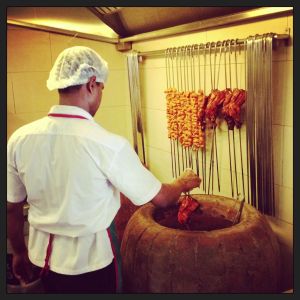
What makes food in KL a few notches above Singapore besides the sheer volumes to work from is a greater sense of authenticity. While I consider SG to be a true cosmopolitan city that provides the most of everything, there is something about Malaysia that is still deeply ethnic. While some complain that the society is overly so, its best reflection could be seen in the food. I stayed in Brickfields where instead of gaining weight, I was actually able to shed a few pounds. With such a rich selection of Indian food, I actually had the choice of eating vegetarian throughout most of my stay. A decent meal would cost somewhere between RM 6.00 to RM 10.00 (Just don’t order the beer). That is relatively cheap even in comparison to Manila prices. The food also allows us to go deep into the country’s culture with choices of Indian (primarily Tamil), Chinese (Hokkien, Cantonese) and Malay. It is said that every region also has its specialty with Penang reaching recent renown. Richly diverse and Richly ethnic!

IMG_1298Could ethnic expression be a bad thing? Certainly not when it comes to food. Not that I am downing Singapore, as a lot of Malaysia have funneled into the once island state. But in the process of funneling, some of the ingredients might have been lost? Perhaps, Malaysia is Truly Asia. Nowhere else better explored but through food. I hope to come back for some more of that Rojak!

Categories
Society

Modern Idolatry and the Social Media

Two days after April Fools’ Day and I am still reeling in from the bitter truth that we are living in the days of a perpetual practical joke, with the general public being its perennial victims. Where jokes usually end in laughter, the Filipinos are on apparent overdose. It is a subtle and addictive substance that helps us cope with our realities. It is said that the Filipino could laugh and smile over any catastrophe; this is perhaps one of our greatest strengths. The realities behind the veil of illusion however are no laughing matter at all! Our society needs to wake up to confront the bigger issues that surround us rather than be preys to the whims of those who control our thoughts and behavior.

Over the Holy Week, I found great privilege in witnessing one the greater Roman Catholic traditions: The Procession. In this timeless tradition, the saintly idols parade the streets of the Philippines. A procession tells the story of Christ’s final days on Earth in graphic detail; a storyboard rendered in hyper-reality. Taken individually the idols played a specific role in the crucifixion story and more importantly, each idol character embodies the roles, character and ideals that they represent. It is a lesson on what we ought to be. The idols are reminders of our Christian forebears, who we are and how we ought to live our lives according to tangible examples.
Looking back at Classical History, mythology was exemplified in sculpture with Gods and Demigods that served as literal embodiments of superhuman qualities in tangible folklore (lessons attached as well). Idols help us see the better side of ourselves against the facts of our flaws and frailties. When someone exhibits excellent qualities or skills to emulate, it is easy for us to say that he or she is our idol. Idols are part of our vocabulary, but where does admiration and emulation end and idolatry begin? Ironically, it begins when the idols become an end by themselves.

Idols and Icons are cultural creations. They serve to represent our ideas and beliefs. Idols render a human face to the ideas we espouse. They serve as a relatable and sometimes better image of ourselves. To love them, is to love ourselves. This however is now far from the idols of today. Can we really ascribe to the modern idols that we created for ourselves? Could our Golden Calf lead us to our Promised Land? Could our Sacred Cows lead us towards the path of National Enlightenment, Restoration and Reconstruction?

From Gods to Prophets, Heroes to Thought leaders, Basketball Stars and Charlatans, we “Follow” and “Like” them all (pun intended). Modern Idols thrive on popularity votes. The more they have the more powerful they become. That’s how we made them to be. Does that make them right? Or have we become victims of “The Crowd Wave” – perhaps caught within the grand gesture of herd mentality? We have become victims to of our own idolatry. We let them lead us even when they are used to distract us from the real issues. At times we venerate them for making bold statements only for them to later mislead us with lies once their popularity has been established. The social media empowers them to say anything. The problem lies once we put them on a pedestal whereby their mere presence or image enchants us, and their own opinions (true or false) become truths.
We wallow in this farce that we have made to amuse ourselves. Here are a few facts on this phenomenon:

  • Kim Kardashian has more than 17 Million followers on Twitter….. WHY?
  • Nicki Minaj is American Idol’s Judge over talent. An even bigger WHY!!

The mysteries to the their success still boggles me, but realizing the manipulation of the media (social media included with emphasis), it is very easy to understand. We don’t even have to look overseas to see blatant examples.

Chris Aquino makes accusations of overt sexual advances perpetrated by one of her exes, grants a very public interview and announces her retirement from showbiz. Chris takes the media’s center stage over more important issues such as Sabah with its death toll swept under the rug.
Chiz and Heart makes it to the headlines (Romantic Picture and all) with their Love Life and her parent’s detailed disapproval featured. This takes precedence over his political platform and other national issues. What a stunt!
The general public laps it up for their amusement, only to leave a few still asking about what happens beyond these superficial and misleading issues.

The social media also lends itself to the creation of our own demigods with some of its charlatans making bold, sometimes visual and even perverse messages to court our attention. While bold statements (some of which I agree with) always garner the “Likes” and “Follows”, one needs to be more discerning with what is being served. Let us separate message from the messenger, the truth apart from the deception.

We have created these monstrous social idols of today reflective of what we aspire to be or perhaps what we want to excuse ourselves of being. Nonetheless the social media empowers us to speak our minds openly and to multiply our message among like-minded people. It is one of our greatest human achievement, as well as our Tower of Babel. With such great freedom, much more is required of us. While many have no thoughts of having you believe that WD-40 is made from fish oil, perhaps most of us would care enough to speak and embrace the truth as Freedom demands from us.

Categories
Uncategorized

Fair Process vs. Shocktivism: A Case-study for Civilized Engagement

It has been more than a month since I last wrote “Fair Process and the Myth of Inclusive Growth” and yet the issue of “Fair Process” or the culture’s lack of it still remains. According to Kim and Mauborgne’s book: “Blue Ocean Strategy”, Fair Process has its roots on Procedural Justice as much as the practice of Due Process is derived from the very same concept.

While Due Process alludes to our justice system, the concept of “Fair Process” is easily understood using a more practical managerial perspective. During the 70’s, two social scientists by the names of John W. Thibault and Laurens Walker concluded that: “People care as much about the justice of the process through which an outcome is produced as they do about the outcome itself. People’s satisfaction with the outcome and their commitment to it rose when procedural justice was exercised.” In this sense, “The means justifies the end as much as the end justifies the means.” While this statement is quite easy to understand, it apparently ends with consistent results. Ergo: Inputs + Process = Output. With the same equation, it is easy to understand why outputs or outcomes are easily spoiled by junk processes. This provides a clear case as to why civilized engagement is usually the best approach.

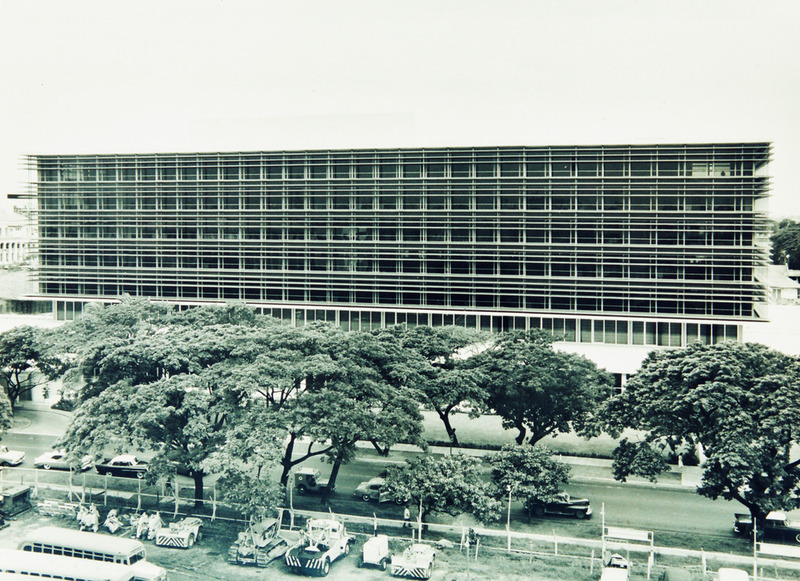
In more recent days, the dynamism of the social media has provided some of the greatest examples for our comparison. The case of the Philam Life Auditorium Theater on UN Avenue, Manila has been the subject of “Saving” and perhaps rightly so. The edifice is regarded as one of the country’s cultural and historical gems with acoustics designed by Bolt, Beranek & Newman, who were also responsible for the Sydney Opera House, United Nations Assembly Hall in New York, Lincoln Center’s Avery Fisher Hall and the Cultural Center of the Philippines. The building was designed by renowned Filipino architect Carlos Arguelles and was rendered in a forward thinking approach that symbolized the Manila that rose from the ashes of WW2. The thoughts of this cultural icon being demolished certainly roused the ire and activism of our netizens especially when it was found that SM had acquired the property. Twitter and Facebook ablaze, netizens rushed to “save” Philam Theater (I might’ve been one of them) via online petition. One infamous shocktivist came brandishing a placard of profanity with direct personal attacks against the owner of SM. This was followed persistently by vulgar and hateful tirades over the social media. In this case the activist would rather say “F@*# You!, just to have the last word.

While I would also like to save the theater, I have to say that I cannot subscribe to this type of approach.
Unfortunately, these types of antics are commonplace in the Philippines where our brand of democracy finds it acceptable to walk out of hearings, negotiations and just about any form of due process. Dramatic as these displays may be, the question remains whether they actually work? With much freedom gained, are we just as civilized? Is there room for fairness and justice?

From a management perspective, Professors Kim & Mauborgne gives us a simple and almost prescriptive approach in their “3-E Principles of Fair Process”.

  1. Engagement: Involving individuals in decisions by inviting their input and encouraging them to challenge one another’s ideas.
  2. Engagement communicates respect for individuals and their ideas and builds collective wisdom. It generates better decisions and greater commitment from those involved in executing those decisions.
    Explanation: Explanation reassures people that managers have considered their opinions and made the decision with the company’s overall interests at heart. Employees trust managers’ intentions even if their own ideas were rejected.

Expectation Clarity: stating the new rules of the game, including performance standards, penalties for failure, and new responsibilities. By minimizing political jockeying and favoritism, expectation clarity enables employees to focus on the job at hand.
Pages 174-176, Kim & Mauborgne. 2005 Blue Ocean Strategy.
Boston, Massachusetts. Harvard Business School Press

The case of following a “Fair Process” was clearly demonstrated when Olivier Ochanine followed a civilized approach that can be seen highlighted in Paul Farol’s article “Olivier Ochanine Defines Advocacy”. http://getrealphilippines.com/blog/2013/04/olivier-ochanine-the-real-cultural-activist/

By following a Fair Process everyone wins; and in this case the Philam Theater has been saved. While many Filipinos seem to have a penchant for impact and drama, sometimes taking a management approach to negotiations could be the best way to achieving positive results. As we are now learning, shock could only create a lot of attention in the beginning but fails to deliver the objective in the long run.

From the procedural justice point of view, negative drama and shock that we have gotten used to also sometimes defeats the point of activism itself. It also causes undue delays to processes and its resulting justified resolutions that could benefit the majority. Justice delayed = Justice denied. Having the last word rendered in vulgar punctuations leave not much room for anything else and closes the door on the possibilities of positive outcomes. Let’s be fair and civilized. I am sure our society and our freedoms could move a lot further from where we are now.

Categories
Uncategorized

The Pork Ball From Different Angles

I have been fortunate enough to have been invited to the Rotary Club of Manila by its President Rudy Bediones at the Manila Polo Club, August 29, 2013. The Rotary Club of Manila (RCM) has a long tradition of inviting excellent speakers, many of which come from their esteemed membership. The motive for me was both personal as I wanted to see some of my late father’s old friends as well as the fact that I was drawn by curiosity in hopes I could learn more about the “Pork Barrel” from an alternative angle.

The meeting was called to order around 12:30 PM followed by the usual Rotary rituals. The guest speaker was Rep. Roilo Golez of Parañaque who gave a presentation entitled “Pork Barrel: A Requiem for the Good, the Bad and the Ugly”. With such a title, one would expect a fair and balanced view of the Pork issue but whatever seems fair always comes from a matter of perspective.

Rep. Golez proceeded to induce references on the Pork Barrel, starting with its history and usage in other countries such as USA, Germany, Australia etc. citing some of the worst cases abroad. The point being, that the pork barrel is used elsewhere and that some of the worst cases are perhaps not representative of the general scenario. The argument was then segued to how he used his Pork Barrel (Priority Development Assistance Fund) with a list of achievements such as the most number of covered courts, school buildings, infrastructure etc. With such as enormous list, perhaps the Pork is a good thing? To note, not a single centavo was given to any NGOs!
He really had me going until the point where I felt that I was being led. The argument is not that the money could do no good, but whether or not the money should be allocated and dispensed in that manner. Ironically, he made some validations in his speech that strengthens the argument for abolition.

  1. The pork can be easily abused: This is not the case just in the Philippines but also in other more developed countries which you would assume have better safeguards and access to information.
  2. The pork barrel is systemic ingratiation: The pork barrel systematizes the monetization of political capital flows from the President, all the way to the local constituents through the hands of the legislators. With much political capital borrowed from local constituents when running for national office, much is owed back and paid back in the form of the pork barrel funds. This perpetuates the cycle of ingratiation and systemic corruption. Secondly, with this type of monetary ingratiation, the principle of checks and balances between the two branches of government is destroyed.
  3. It is discretionary in nature and therefore arbitrary: Rep. Golez cited an example where a congressman as a legacy chose to allocate all of his pork barrel to fund 40,000 scholars in his district. While scholarships are never a bad thing, it also begs me to think whether or not this was the only need of the district over things such as: food security, health, infrastructure and disaster control. It just proves that the usage of funds is arbitrary and according to the whims or preferences of the Representative.

Some of the highlights of the luncheon came during the Q&A portion where Roberto Pagdanganan of Bulacan a former Representative himself cited the legislative praxis of former statesmen such as Sumulong and Diokno. Emphasizing that the job of the congressmen is to make laws and policies that would help their constituents rather than choosing and implementing projects themselves. He also mentioned that the ingratiation between the executive and the legislative branch also ruins checks and balance. “How can we effectively check and balance them, if we are ingratiated to them?” (nonverbatim)

Former Representative Payumo of Bataan also cited an example where constituents would often approach their representatives for support such as medicines in a far-flung place. The congressman would usually give out of his pork barrel funds with uncertainty that the support would go where it should. The point being that the congressman’s office usually would not have the administrative means to check and make sure that projects are implemented properly or if implemented at all. It is the structural limitation of their offices.

The primary function of legislation is thus legislative in nature and should have nothing to do with the administration, management and funding of projects. It is best that the representatives’ competence is reserved for “The House” where it belongs otherwise it is performing a disservice to its constituency and the nation.
The irony here is that where administrative capacity is lacking to select and implement projects among legislators, there are many legitimate, sustainable and competent NGOs that could implement many of these projects with utmost transparency. It is unfair that these NGOs are demonized due to a scandal involving government and the rotten eggs. Shame on them who are guilty of colluding but spare the innocent who continue to do their jobs better than you can, with or without your pork barrel support.

To end, I’d like to thank the Rotary Club of Manila who gave me the opportunity to write this article with an even greater view for the Pork Barrel issue due to the Speaker’s presentation and the rebuttals of his colleagues. It is a privilege to see the pork barrel from different angles, which makes an even more compelling argument for its abolition. While everyone seems to have their eyes on Napoles, let us keep our eyes on the ball instead for its abolition.

My special thanks goes to Rudy Bediones who has allowed me to see my dad’s “old” club in a “new” light. I am assured that RCM is relevant still. Hoping for more enlightening discussions such as this.

Categories
Reviews

Still Les Miserable Over Argo

It’s been more than a week since the Oscars and more than a couple of weeks since I’ve seen two of some of the most talked about movies of the year. Two weeks, and I am Still Les Miserable over Argo.

Having seen both Les Mis and Argo, I would’ve thought that Les Mis would’ve won the Academy Award for Best Picture. This is not to discount that Argo was a fine film, as it really was, but looking at both from the angle of “making the most out of a medium” the aspect would have to favor Les Mis. While readers would dismiss this blog as being biased for Victor Hugo, I would like to posit my opinions in both praises and criticism for Argo.
For those who haven’t seen Argo a synopsis of the movie could be found here:
http://www.imdb.com/title/tt1024648/synopsis

Argo was a good story told on film and would rank to be one of the finest examples of “story telling”. Argo proves that it is very hard to ruin a really good story, especially if it is one from history that remained untold. Cinematography was rendered in style and feel that made you think that you were watching a film from that period (circa 1979).

Perhaps some of its minor flaws are pointed out due to its sincere efforts to be “era-correct”. These efforts noted were the use of a warm tones for the entire film and the non-high-tech cinematographic techniques such as the hand zoom-ins from aerials. There seems to be an effort to portray cinematographic techniques available during the time. There was even a scene where the camera focused on a picture of Lee Majors on a wall. These images purposefully draw us into a particular point in time. Some of the throw-offs however were:
The use of Blue LED lights in one of the robots seen on a set. Blue LEDs were not popularly used till late.
The wipers on the Canadian Ambassador’s car used one of those floppy rubber types which didn’t come into popular use till the late 90’s to early 2000s

Speaking about cars… I was also thrown off by the appearance of a yellow Pontiac Firebird in the beginning of the movie. You would think that the protagonist would’ve used such a car, it turns out that he didn’t. Cars play an important role in movies as they are often used to develop the characters of leading men. In this case the yellow Firebird was just a scene-stealing fluke. These minor flukes are enough to throw off the “suspension of disbelief”.
In fairness I would have to say that we saw Ben Affleck at his best, as an actor or maybe even as a director. He successfully disappeared into his role as a kind-hearted CIA operative. Remembering the classic singly dimensioned Ben Affleck in “The Town”, he was able to reinvent himself in Argo. Do I believe it was good enough for the award? “I don’t know”… So Alan Arkin says: “Argo F#¢* yourself!”

In contrast, “Les Miserable” in my opinion represents the best of what film could do to an already great classic story, even-more-so one of the best-loved musicals of all time. Having seen Les Mis twice on Broadway, once as a High-School student and another time in College. I was somewhat familiar with the story but even more familiar with many of the songs. Seeing a show on Broadway tends to be more of a musical experience rather than anything else. It was a cultural experience that is less on the story but more on the performance.

Seeing Les Mis on film adds a strong visual element from what is usually missed on stage. Film complements the entire story by painting scenes that are difficult or impossible to portray on stage. Even if you had the best seats in the house, you can never have the multitude of literal perspectives and angles that cameras could give. The stage could never display the poetic illusions that film could give in terms of scale, colors and effects.
By adding strong visual elements, stories are better understood and the totality of the experience is enhanced by a ten-fold. In all honestly, I never understood the story behind Les Mis until I saw the movie. Scenes, which were confusing on stage, were clarified on film. These instances were especially true when scenes required apparitions. The story was replete with them.

As far as performances are concerned the movie never failed as well. All the actors played roles where you didn’t see a Singing Gladiator, an Australian Drover or a Sex Slave that wears Prada. All three of them dissolved into their characters. Most of all, everyone was drawn into a visual and musical experience that makes you forget the world for at least a few hours. Everyone was gripped by the experience. All eyes were glued to the screen; everyone seemed almost captured by the music. Best of all, the audience was sympathetic to the all the characters and equally absorbed within the greater context of the narrative. It was a profoundly human experience that bridged across time and cultures.

Isn’t that what a great movie is all about? Aren’t we supposed to award great works of arts as so? I believe that the Oscars are more about the politics and actors rather than the human and cultural achievement brought about by the medium of film. It begs us to question the legacy of cultural and artistic value that we will leave behind. If that is what Hollywood is selling, then I have to say: “Argo F#¢* yourself too!” As for now, I’ll remain Les Miserable over Argo.

Categories
Economics Politics

Fair Process and the Myth of Inclusive Growth

A friend recently passed an Industry article to me that quotes the Fraser Institute in stating in a rather succinct statement:

“And the places you should avoid at all costs are Indonesia, Vietnam, Venezuela, Democratic Republic of Congo (DRC), Kyrgyzstan, Zimbabwe, Bolivia, Guatemala, Philippines, and Greece, concludes the survey.”
In a December 31, 2012 article by the Inquirer, the Mining Industry has estimated a Two Billion Dollar loss in mining investments for the Philippines. Beyond the obvious numbers we have to ask why industry investors would mention the Philippines as “one of the places you should avoid at all costs”? As a country that seems to be poised as the next emerging tiger of Asia, it is funny to note industry reports that signal a stink that drives them away.

The answers sometimes lie in the way we treat big business and foreign investment. Ironically these are the same people that we tend to court for the much needed capital infusion for economic development. Some of the more obvious reasons, which make it difficult for business are: Restrictive and Protective ownership policies that perpetuate the control of the ruling class, Extreme levels of activism against development and a general sense of apathy from government. While the administration touts “Inclusive Growth”, many especially the poor continue to get left out. The administration continues to fail in providing an atmosphere of fairness for all.
The argument takes us all the way to Sabah that now serves as a current and highest example of apathy. Wrong or right, the Sultan and his followers are Filipino citizens who now face the perils of Malaysia’s force. The recent reported conflict that ended in casualties (most of which from the Philippine side) is a foretaste to massacre, if it already isn’t. To do nothing is to consent to it!

The state has a responsibility to protect the interest and the lives of its citizenry and to ensure that a “fair-process” is observed. I firmly believe that the Sultan is only pressing for what he believes is his right and interest. While we might be able prove him wrong, it is the responsibility of our state to protect Filipino lives abroad and to ensure that her citizens are treated fairly under due process. To make pronouncements that a citizen is “hard-headed” and fighting a “hopeless-cause” makes the citizen indeed hopeless as his country obviously abandoned him. If the state cannot advocate for the lives and safety of its own citizens, what more if it were others?

Fair Process or Procedural Justice is lacking in this country. Decisions and regulations are enforced without the consultation of all parties involved and affected. Industry regulations are repealed at the drop of a hat sometimes using the highest office. Lobbies are usually weighed in favor of those who speak loudest and closest while others are subjected to apathetic delays. There is a general sense of antagonism towards certain industries; the worst victims of which have already invested in this country under a promise of fair-regulation from years ago. It is costly for them to stay; it is costly for them to leave. Nobody advocates for them or at least makes sure that fair-process takes place to protect everyone’s interest. How inclusive can growth be when others are excluded from the benefitting fold? If it’s not justice for all, then I’m afraid there is no justice at all!
The very government that we rely upon in upholding transparency, good-governance and fair play cannot provide an atmosphere of certainty. Therefore it cannot deliver the promise it intends to make for foreign investment.

While the economy seems to rally upwards, the richest get even richer while the poor gets poorer. The heavily taxed middle-class that has little or no charge to government services only progress in small financial increments where they are. Meanwhile there are no new high quality jobs being created. The promise of Inclusive Growth remains to be an elusive Myth to be sold; but nobody seems to be buying it. Perhaps you need to be an extremely wealthy Filipino to afford it.