Categories
Leadership

It’s The Way He Said It! Speaking the Unspoken Language

Originally Published in the Star Malaysia 07.09.14 for Leaderonomics

How many times have you heard someone walk into the room uttering the words: “It’s not what he said, It’s how he said it!” The phrase is usually said in negative reaction to messages uttered by bosses, who seem to be (as research would indicate) the primary reason why good employees leave the company. Could they have been simply misunderstood?

The workplace of the millennium has changed wherein there is greater integration of diversity from all aspects. We have multigenerational perspectives, gender as well as varying levels of cultural and ethnic diversities. This makes the workplace more dynamic for leaders who only want to come across and be able to communicate strategic direction or perhaps just maintain the delicate balance in the working environment. In other levels, being able to communicate extends beyond the doors of the office. You can be on the phone with a client or even face to face with them. In many varying aspects, it is easy to think that speaking another language could be a plus.

When I was working through school in the US, I worked in a clinic which processed almost 100 patients per day. During those moments of having to speak with many of them, I thought it would be great to learn how to speak Spanish. So I did, and I still carry this learning to this date. However it was not about the language per se where we received some of the most violent objections. Most of the time they complained about how they were treated through process delays but more importantly they were usually upset at how rudely they were treated by staff. “Rudeness” tends to be subjective as sometimes in multicultural environments, accents and inflections were grossly misinterpreted. In other aspects, this issue of communication is beyond words where you might find some cultures are more gesticulate than others. A head nod in one culture could be totally ambiguous or even opposite to another. A wave of the hand could either be a welcome or a curse. The effects of these non-verbal signals could be devastating. Subjective as it may be, these valid human encounters are worth managing.

The workplace is no different as people need to be considered as internal customers. As a leader you should also look at your staff as consumers of your leadership. But there’s more to communication than the spoken language. Most often you will find people again and again upset saying: “It’s not what he said, it’s how he said it!” Words seem to fail us, and even if I consider myself to be a pretty good writer, I still find myself having to meet face to face in order for me to accurately convey what I mean. According to recent articles, employees don’t leave their jobs they leave their leaders citing that “poor communication” is often the cause of the break-ups.

There is a huge amount of study which suggests that a majority of how we communicate is “non-verbal”. This is literally beyond words (pun intended) where most of our messages are construed mostly out of delivery rather than the words themselves. So goes the familiar phrase again: “It’s not what you say, but rather HOW you say it!” In a long term study conducted on communication, Researchers: Mehrabian & Wiener in 1967 and Mehrabian and Ferris in 1967 resulted upon the often quoted 55/38/7 formula.The numbers represent the percentages of importance of varying communication channels have with the belief that 55% of communication is body language, 38% is the tone of voice, and 7% is the actual words spoken.

While the percentages are often misused and misquoted, a vast majority would agree to the point that the majority of what we perceive is non-verbal cues over the actual words used and thus validates the issue that non-verbal communication and the unspoken language are equally if not more important than words in communication. This argument behooves leaders to take a closer look at “how” they say things rather than “what” they say.

Thousands of years before the invention of emails and even way beyond the fax machine, there was a classic tradition called oration. Oration or Ars Oratia was a Roman art of speaking in public which was linked to an inherited tradition from Greece. Oration was considered a highly developed professional competence that was necessary for leaders to learn. Even Julius Caesar during his youth was said to have been schooled by masters in Greece to learn this fine art. In modern times this Greco-Roman remains to be a highly developed professional competence that is traditionally carried by lawyers and politicians. In the modern sense from which most modern legal dramas are played, “Trial Lawyers” or Barristers take to the courtrooms to deliver a persuasive argument in front of juries and judges. With persuasion and influence being the desired effect of these skillful displays, it is easy to think that effective delivery goes beyond just words but everything else that delivers a persuasive argument.

In my own formal study as a speaker, we were also taught that delivery is much more than words and that delivery in the non-verbal aspect can be broken down into the following elements.

  • Vocalics or Paralinguistic – Beyond words this could include inflection, tone and pronunciation. This is how most perceptions are based. This is “how” things are said and therefore perceived or received. Pay attention to your tone of voice and the volume when you speak. Paralinguistic can also refer to sounds which are non words such as: hmmm, huh or ugh! Even if these sounds are not really words, they could be equally if not more communicative to the receiver.
  • Kinesics – includes gestures and facial expression. For example, the way you wave your arms around could affect the type of attention and reaction from your audience. When extremities are placed within a comfort zone, it could connote formality, diplomacy or sometimes defensiveness when arms are crossed or behind your back. A simple point of a finger could mean either specification or culpability.
  • Ocalics – is the use of your eyes or eye contact. This somehow is the primary point of connection with your audience. In some cultures and context, looking directly into someone’s eyes could be rude, while in some cultures if one does not look directly into the eyes, it could mean you’re hiding something and thus erodes trust. In public speaking, it is good to make eye contact with those that seem to be agreeing with you. It also helps ease pressure from the speaker as he feels like he’s connecting and conversing with his audience.
  • Proxemics – is the use of space between the speaker and the receiver. There are appropriate conventions to this that ranges from intimate (0-18”), personal (18”-4’), social (4’-12’) and public (12’-beyond). Cultural norms apply. Speakers usually stay within a 3 feet bubble, but using the space within a stage or a room by moving around could give the speaker a stronger presence. The movement also leads the audience to follow him thus creating more attention.
  • Haptics – is the use of touch. This type of body language is powerful as it could be inappropriate in some context. A touch on the wrist, the elbow or shoulder is a physical form of persuasion. Often used to connote a certain level of closeness and sympathy with the receiver. The touch is used to signal a receiver towards a concurring response or agreement. Please use this with extreme caution! It can also be construed as a form of flirting.
  • Chronemics – is the use of time and sequence. While it is expected for people to be prompt, in Latin cultures tardiness tends to be more acceptable; thus the term “fashionably late”. Tardiness is frowned upon in anglo-american cultures thus in a bilingual Hispanic American context appointments are usually specified as “Hora Latina” (Latin Hour which is +/- 30 mins) or “Hora Americana” (on the dot, or “en-punto”). On another note, for experienced speakers “the pause” which is a momentary moment of silence at the height of expectation is also used to draw tension, attention, and control for the speaker.
  • Objectics – is the use of objects such as rulers (as teachers would use), props, and illustrations to drive a point. Clothing, accessories, and even vehicles could also be used to lead the audience towards communicating a role and social status to direct an audience towards a desired response. This too is a form of non-verbal persuasion.

As a leader and communicator, one must recognize the importance of the unspoken language for effective communication. In the worst cases, “conflicting” messages are a result where non-verbal cues are inconsistent or at odds with the verbal message. This often leads to miscommunication and mistrust. The results could be extreme. It could even lead an employee to leave. On the other hand a combination of proper verbal and non-verbal cues could make a compelling message or a persuasive presentation that leads to positive action. Do remember that action within this context speaks louder than words. Learning the “unspoken language” could make you a more effective and persuasive leader in the workplace.

Categories
Leadership Life Management

From Checkpoints to C-Suites: 4 Things That Can Help You Connect the Dots

John Walter S. Baybay

Originally Published in the Star of Malaysia Leaderonomics Section – 06.12.14
In Steve Jobs’ commencement speech in Stanford, he made mention of connecting the dots; and that connecting the dots only makes sense looking backwards and not forward. While I do have a full appreciation for this, many of my experiences may not be as glamorous as most people would think. More accurately, it was “somewhat” glamorous towards the end, but never ever glamorous in the beginning.

Seven years ago I took a field assignment to a place that not too many people would dare to go to. The Philippines is a country largely unexplored as an archipelago of more than 7000 islands with issues so socially complex that flying for less than an hour can take you to another place that is terribly unfamiliar and not to mention scary due to its reputation. Being flown to place that has been known in the news due to armed conflicts and where towns have been razed to the ground, does not seem to strike the traveler as a dream vacation. But duty does beckon and one could only hope that expectations can be reversed once you land. The problem is that it usually doesn’t!

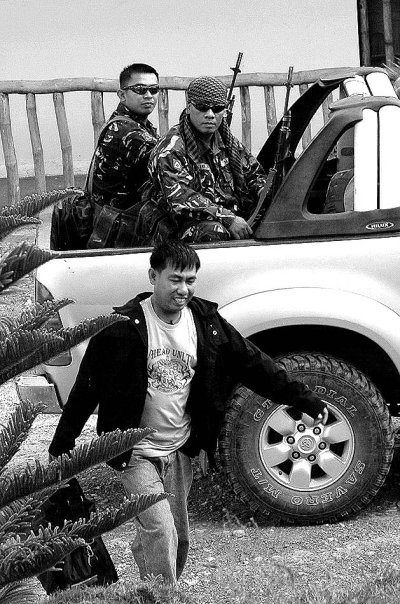
2107_60529108328_960_nDue to the bigger hotel being fully booked, we had to stay in a small hotel that resembled a place that was left in the 70’s. I had imaginations of a CIA agent sitting in the corner of the same coffee shop wearing a red hawaiian shirt, dark wayfarers with a Pina Colada in one hand and a newspaper in the other. To make things worse, we were advised to leave post-haste in a white van that drove for more than an hour to a safe house to change into another vehicle which turns out to be a convoy of large pick-up trucks with the backs loaded with heavily armed men in fatigues. Off we went with a huge cloud of dust behind us as we were careening at the sides of a twisted mountain trail at full speed. There was an eerie silence in the car which is not typical of Filipinos (usually full of chatter and laughter) while I was accompanied by a young British colleague who came with me on my field assessment. We passed several military checkpoints which seemed customary to most in my company, but unsettling for me and the rest of the team. I was texting my wife for updates on how I was, still alive but not knowing exactly where I was. I was scared and as I looked at the phone, the bars which signified the signal and my connection to the rest of my life was getting lower and lower as we went deeper and deeper into the woods. The signal went down to zero and I felt like my lifeline to the rest of civilization was severed. What if something happened? Anything could happen! We could have been ambushed or kidnapped but then who would know? As I was clutching on to my phone, I sighed with fervent prayer saying: let me be OK. After that, a thought: “What am I doing? How did I get here?”

A few months back I was the Executive Director of a Trust that helped young people get into business through funding and mentoring. I worked in Enterprise Development at the International Labour Organization (ILO) as a Programme Manager from six years ago and this has been my career since 2001. With that I found myself in a pickup full of armed men six years later doing a feasibility assessment in a place where enterprise development was needed the most as part of a mining and perhaps post-conflict rehabilitation. I dialogued with some of the tribal leaders as well as the local mayor who shared a story of how his whole town was razed to the ground by rebels. People were walking with their families on the streets in an exodus out of town with only the belongings that survived with them. It was a razing of medieval proportions! With that story, he was even insinuating that I stayed longer for a better appreciation. My thought was: WHAT?

I did the assessment with a Micro Financing partner who later pulled out with the news that a micro financing worker was murdered during our stay. I left my footprints there, I sent in the report and called it a week of work.

Four years later I receive a call from the same lady that gave me the scary assignment in Mindanao. At that time I had just finished some of my best corporate consulting work after leaving the Economic Development sector. Corporate work is as glamorous as people would expect it to be. Being able to work in posh environments and brands that sparkle in your resume is always a delight. I was offered to work for another mining company for a year doing the same nature of work I did in Mindanao, but this time in a more hospitable environment. With some hesitation I took the job by instinct and I found myself flying in a private plane every week on site. Again I asked myself: “How did I get here?” The answer was actually simple, I just had to look back. There are a number of scenarios in the past that build into where I am right now.

The truth is that decades of experience has brought me to where I am. If I hadn’t worked for the ILO and the Prince’s Trust program thirteen years ago where I was screening up to 50 business plans per week, then I would not be the business planing consultant that I am now. With that experience of working with young entrepreneurs, I am now able to provide coaching and advisory services to some of the most recognizable entrepreneurs in the country. Many of those young people whom I have mentored and coached a decade ago have moved on to greater things as successful entrepreneurs. Some took the enriching experience to pursue very promising careers beyond school.

Another point is that If I had not taken that scary trip to Mindanao in the back of an armed pick-up and checkpoints, I would never have imagined taking a private plane to work and back on a weekly basis. My economic planning experience and analysis have brought me face to face with other firms such as Michael Porter’s Shared Value where I was able to showcase some of the best examples of how their own frameworks like Value Chain Analysis could be used on field. The experience has also allowed me to have a deeper look into some of the most compelling economic issues that plague our country. The first hand insight has led me to write some of my best work that is currently being referenced by many development economists online. Most importantly, it has developed a greater sense of social consciousness that has fueled many things I have written about. Without having taken the risk in the past I would not have the experience to write about this now.

(Loosely quoting Steve Jobs) Connecting the dots, looking forward is always hard. It is easier looking at the dots looking backwards. This said there are Four things that I want you to remember:

  1. Have courage: You will be faced with many unsettling circumstances in your life. Have the courage to move forward despite difficulties and remember that at the end of the day you will have 3 things: Your Faith, Your Family and Your Friends; With those things you will always have everything you need to move forward.
  2. Know Your USP: Know your Unique Selling Proposition. Know the skills and talents you have in the offering. Know your purpose and design.
  3. Create a strategy for yourself. Perhaps doing a SWOT (Strengths, Weaknesses, Opportunities and Threats) analysis on your own personal brand could be your first step?
    Opportunities for growth will always stretch you. Perhaps you might find yourself slightly inadequate or lacking experience. Take the opportunity anyway when presented. Walk through the open door and you will find that your ability to learn will always help you grow into a new role.
  4. Attraction: Who you are determines what and who you will attract. Look for patterns in opportunities that are recurrently being made available to you. If you’re always being shortlisted for certain assignments, then that gives you a clue as to what you are great at.

We learn more from mistakes than our triumphs. Make your mistakes early and you might find that many of those mishaps could even lead you towards a greater understanding of your potential. If there is anything you must do, it is that you must keep moving forward. Keep connecting dots. The further you move along, a greater image of your life will be revealed to you carrying you on to your destiny.

Categories
Leadership

The Leadership Vantage: Seeing the Forest and the Trees

John Walter Baybay
Originally Published in the Star Malaysia – Leaderonomics 04.20.14

I have been working in the area of strategy and planning for the past 17 years and I would have thought I have seen everything at this point. I worked with many companies who at some point have been considered to be the most innovative companies that the world has ever known. I once had a client whose company was once known as the leader for lighting after WW2 and was one of the pioneer of the compact disc in the 80s and 90s only to suffer in more recent days to commoditization as cheaper products most of which are copies of their own designs are flooding the markets from China. One thing is inevitable and that is “change”. There are no hard feelings about it, when we realize that we simply have to innovate.

Industry structures shift and those who fail to see these changes early when they start to happen usually are the ones who are hurt the most. This failure to see the shifting environment has resulted in some of the most harrowing examples of restructuring and lay-offs in corporate history.

Leaders need a better vantage point to see what is going on. Change management gurus have headed up the boardrooms to develop breakthrough strategies and introduce game-changing strategies to steer the company in new directions. Some have been more successful than others. Many however always attribute successful changes to leaders who had the ability to see the big picture and determine industry shifts that were going to change the rules of the game.

The likes of Bill Gates and Steve Jobs were able to usher in the era of personal computing in the 80s through their forward thinking perspectives. The airline industry is close to 100 years old and the industry still continues to shift on both extremes from the highly differentiated Virgin Atlantic to the reconstruction caused by the budget airline segment led by the likes of Southwest and Air Asia. The ability to see the big picture and go beyond what everyone else is thinking has been the determining talent that has led to the prosperity of innovative companies. Many of which were able to thrive in periods of volatility and challenge.

The roles of leaders in having to identify changes that will affect their organization and industry for better or for worse cannot be understated. While it is very unlikely that we can have a reincarnation of Steve Jobs or have the divergent creativity of Richard Branson on demand, the ability to see the big-picture is a key talent of any strategic leader. The question that remains however is whether or not having the ability to see the big picture is enough? It is obviously a “yes” in a situation where the organization has a crisis of innovation and needs to get unstuck from its status quo. A fresh perspective is always needed.

The importance of having a good vantage point is that it allows the leader to take a step back and look at the bigger picture. It allows him to see what is happening in the world outside the organization and its impending effects to the current strategy. It allows the leader to get out of their own processes and go deeper into the employee and customer experience. This is an ability that we would like to call “Seeing the Forest and the Trees”.
The former notion is that a leader does either-or. Either he focuses only on the big picture (forest) or he sees them for the trees (internal processes). There is a danger of being too much of either.
When you only see the bigger picture, you might find yourself in a position where you believe you have motivated people on the new strategy, only to find months later that nothing seems to be moving.

On the other hand, if a leader is too caught up with the details, processes and procedures, there is a great danger that the organization might not respond quickly enough to changes in the industry and customer demands. Worse! Stakeholders get impatient in not seeing immediate results of the intended changes and lose confidence both in their leader and the team. Pink slips are being issued, the leader is replaced and the company starts all over again, and that is if it has not imploded yet. This then sends ripples outside in the marketplace and the public loses confidence in the company and its management. Everyone says goodbye.

Seeing the Forest and the Trees is having the ability to view things from different lenses at different points in time when they are needed:

  • Situational Appraisal and Scenario Analysis: Use a big picture perspective and engage your team in looking at the facts together and have a shared appreciation to determine a broad strategy. Develop a broad sense of vision and direction amidst the sea of competition. See the future through a telescope and build a navigational roadmap.
  • Use other people’s perspectives in visualizing different scenarios that could affect the execution of your strategy. In this case you are not using your own lens but that of your Cross Functional Team (CFT). This gives a leader a chiastic perspective across the organization. This helps the leaders anticipate barriers to execution.
    Have a diagnostic mindset: Sometimes a leader needs to take a “deep-dive” into their own organization to identify constraints to execution. These constraints could be motivational or systemic. They could also be resource based. At this point a leader needs to have a lens similar to microscope to get to root causes of problems and deploy measures for corrective action.
  • Instrument Flying: Have a dashboard for navigating the strategy. Build a system for measuring progress and milestones. Have the necessary indicators for strategic traction that measures finances, learning and growth, customer perspectives and internal processes. Use a balanced scorecard perspective.

The good news for the leader is that he does not have to be omnipotent to see the Forest and the Trees. He needs only to have the right perspective at the right given time and if he chooses to specialize in certain aspects, then a true leader recognizes the need for the other perspectives and gives way to empower others to formulate and execute strategy.

Gone are the days that one leader does all. Leadership in the Age of Execution as I wrote about earlier, demands more collaboration and a broader cross-sectional perspective to make things work. This demands a certain level of leadership from all of us and we cannot have a zero-sum perspective of power and influence.
Having a leadership vantage makes us realize that strategy goes beyond the self or the leader. And while it may take a visionary to cast direction, it takes a whole crew to navigate a ship to its destination especially in troubled waters. Use the right lenses and get the right perspective.

If you found this article to be useful do not hesitate to drop me a note by following me on Twitter: @JohnSBaybay or visiting our website: square1coaching.com to leave a comment.

Categories
Uncategorized

Human, Take Me To Your Leader! A Human Sigma Perspective of Leadership

John Walter Baybay
Originally Published in 4.19.14 The Star Malaysia

In a previous article called “Leadership in the Millennial Age of Execution, I have said that the era of the 80’s and 90’s visionary is leaders have started to ebb away. During Apple’s turn over to Tim Cook, the market and the industry reacted with quivers of ambiguity. The public is often looking towards a venerated character on to which they could latch on. This has always been the paradigm of leadership. We see it in Hollywood and we see them in reality shows. In alien movies, the leader takes the sole responsibility for speaking and deciding for the rest of humanity, sometimes in very sacrificial scenarios. The funny thing is that they never seem to land in Russia, China or India!

We’ve idolized the characters of Jack Welch, Tony Fernandes and even Donald Trump! What will happen when they’re gone? Have you ever considered that the closest thing that you have as a leader is your immediate boss? If you haven’t figured that out yet, then “You’re fired!”

Apple’s Tim Cook, being the competent manager he is, has never risen to the same levels of visionary charisma as Steve Jobs. He is just a different person. That does not mean that he is an insufficient leader. There seems to be a notion that managers are different from leaders but the truth of the matter is that leaders are more accessible than you think. We simply have to change our notions on what they are supposed to look like. Yes, if your boss has the power to fire you, he is your leader. What about the man or woman tasked to lead a project, is he not a leader as well? Of course he is! According to John Maxwell, “leadership is influence, no more, no less”.
This influence extends far beyond the realms of ethics, morality and principles. In the previous article I mentioned leaders must use their influence to garner resources (money, physical assets and human resources) to get the job done. Many times, you do not have to go as far as the CEO to be able make things move. Apart from the romantic notions, leaders have their more accessible and practical uses. This is the supply side of leadership.
On the demand side, we must appreciate that our expectations of leadership has a strong human perspective. Leaders and the people they lead are humans. While this may be stating the obvious, we need to realize that emotions define the human experience and so affects the way we look at our leaders and the way we latch on to them.

In John Fleming and Jim Asplund’s book “Human Sigma”, they defined a customer and brand experience essentially as an emotional experience with progressive levels of engagement called the “Four Dimensions of Emotional Attachment”. While the mental model was used in relation to employee and customer engagement, the same is true in the ways we look at leaders. Leaders also need to look at their employees as internal customers and ultimately, consumers of their leadership. The model progresses from Confidence, Integrity, Pride and Passion under the following description with some paraphrasing for our example.

CONFIDENCE: Always delivers on promise. Name I could trust
INTEGRITY: Fair resolution to any problems. Always treats me fairly
PRIDE: Treats me with respect. I feel proud to be a customer or employee
PASSION: I can’t imagine a world without this Perfect Company for people like me.

With the above example we could see how these human dimension could frame an emotional perception over brands and even our leaders. Developing a leadership brand could be drawn along the same progression from confidence to passion. With this framework, it is not difficult to understand how some leaders have such strong levels of following. This can only be attributed to the progressing levels of emotional engagement and attachment.
Conversely, we can also see that a failure to engage your employees as a leader, can lead to stale or waning influence over behavior. Behavior determines your team’s output and effectiveness. Employees and their emotions cannot be managed exclusively from each other. We work in a human environment with behaviors that are driven for the most part by emotion.
There is more to charismatic leadership than what meets the eye. Do you have a leadership brand that your employees or teammates can trust? Are they confident in your leadership approach? Are you delivering consistently on your promise as a leader? Use the Human Sigma as a model and take it step by step.

Categories
Uncategorized

Leadership in the Millennial Age of Execution

Have you ever gone to a motivational seminar where you left the halls charged and motivated to slay your next day only to find that when you get there, you actually don’t know what to do next? I’ve said it before. I’ve heard someone speak. I’ve seen a bunch of TED-X videos and said: “I am so inspired and motivated! Now what next?” Where is the take away? Leaders Wanted! Please!

The truth of the matter is that as much as we have these great learning events that expose us to charismatic and inspiring leaders, we simply cannot bring them back home to talk to our parents to convince them to support your strategic shift in careers. Unless you’re paying these speakers to talk to your boss for an hour on how to become a better leader (not that he would appreciate it), then perhaps you need to come to grips with reality. There’s a lot of work to do. You need to tell yourself: “Get Over it and Get it done!” Let’s face it; if you’re feeling the pressure and cannot seem to gather the strength and motivation to make it over that hill, then perhaps you do need a leader.

Leadership however is not what it used to be. Gone are the days of charismatic visionary and motivational leaders. According to a John Hopkins School of Education the new millennium has pronounced a paradigm shift on how we look at leadership. The Visionary leaders of the 80’s and 90’s have seemed to have a muted importance in the millennial workplace. Not that “Vision” has disappeared, but the importance has shifted in favor of “Execution”.

The demand on leadership has also expanded its dimensions. The working environment is marked with so much diversity that a leader needs to have both a deep and broad understanding of his/her working environment. The new workplace emphasizes on gender sensitivity, race, culture, religion, age, current events, and maybe even music. Leaders need to work within a greater context of complex social issues as everyone brings a piece of it into the working environment. It influences behavior, work outputs, and quality. It is said that during the golden age of the 50’s it was enough to be “competent” (IQ) but in this millennial age leaders also need a high level of Emotional Quotient (EQ). A leader needs to be emotionally strong to handle complex situations and also emotionally intelligent enough to manage the feelings of others.

Beyond the issue of EQ however, is a functional realm that focuses on implementation. With such, functional skills such as planning, resourcing, controlling, and documenting tend to have great levels of importance. There is a need for a leader/manager who has a meticulous eye for process management. A leader needs to be able to identify constraints, anticipate delays and creatively navigate immediate changes in course and direction. Knowledge, Skills and Experience counts! Leaders need to go to where bottlenecks are and have the knowledge to fix them. In a project driven enterprise as we have today, leaders need to have an understanding of the language and protocol of project management. It is not enough to cast a vision and expect people to buy-in expecting them to execute automatically; sometimes a leader also needs to bring his/her people through a collaborative process of gathering a situational appraisal, brainstorming on creative options and following-through with a concrete action plan. This takes both a diagnostic mindset and knowledge on the use of analytic and strategic development tools. It isn’t enough to cast a Big Hairy Audacious Goal (BHAG) and say “Let’s Do It!” People need to know why and people would appreciate if a leader could go to the level and show them “How”. If you find yourself telling someone how to do his or her job without you knowing “how”, you will be in a lot of trouble. Credibility along with the trust that comes with it goes down the drain.

The challenge for the leader in the millennium is that we are living in an environment where every answer is just a click away. We live in a world of immediacy and access. Speed and convenience are no longer luxuries, they are expected. Technology has shaped the way we work, communicate, and think. Information is instantaneous. Gone are the days when we had to go to card catalog in a library to find the book that you need. Research took days, piles of books and red eyes zipping through miles of microfiches. The screen generation might not know what I am talking about, as research to most would be a matter of clicking the “search” button.

The phenomenon of immediacy also places similar demands on leaders. This gives a whole new meaning to the old term “Management by Walking Around” (MBWA). Leaders need to be accessible and teach. Leaders need to be a great source of knowledge and information. Just as they would love to see a YouTube video on how to do a particular task, it would be even better if a leader could demonstrate how things are done with a “hands-on” demonstration. This is not a negation of today’s workforce. While leaders are investing the time to teach, coach and mentor, they are also transferring skills and sometimes values into the workplace. Effective leaders of today invest heaps of praise and acknowledgment to their teammates, as they know it pays dividends in productivity. The role of leaders is more holistic than the old paradigms. A leader is that wise indispensable sage that empowers people in the organization. This is how things “get done” in today’s workplace.

The misconception about “execution” is that it is based on “hard skills”. The truth is that “execution” requires both EQ and functional competence from a leader. Getting things done requires both politics and skills. While you may have the “planning” tightly screwed down, you may find that it also takes a bit of politics to get your projects prioritized and resourced. You may be able to command a good and engaging presentation, but you may also need the data to back up your arguments. You might have all the data on hand, but many times you need a team behind you to back it up.

Leadership in the age of execution requires the ability to move laterally and vertically to get things done. A leader needs to have the integrity to exercise his/her influence in every level of the organization, even if it takes someone else to do it. It is not enough to have a big picture; a leader must be able to see both the forest and the trees. Today’s work environment calls for leaders with flexible roles where one can be a strategic leader in one situation and a field marshal on another, taking personal charge of a project with a team. Effective leaders know when to coach and when to mentor and actually know the difference between them. They know when to direct and they know when to facilitate. They know that leadership is less about talking and more about doing. They navigate through a whole slew of issues and eat them for breakfast in a meeting or over an afternoon coffee.

Today’s effective leader knows that “the task” is way beyond self and has no time looking down. The mission is more than the leader himself; it is more than what his lifetime could afford. Excellent leaders are always scouting around screening for talent and grit. They are always looking around searching for opportunities to work with the next set of leaders that will get the job done, someone to whom they could pass on the baton. That is the Leader of the Millennial Age of Execution. It could be you or the person next to you.
For all my mentors of the past, this one is for you: THANK YOU!!

Categories
Health and Fitness Leadership Life Management

Time and Traction

Originally Published at The Star Malaysia – Leaderonomics 03.26.14

“Traction” is a recent buzzword that I thought I left behind in my days of working with start-ups and business planning. In my case, it was often used within the context of funding where infusion is sometimes done in tranches. Where a sum of money is allotted for the capitalization of a business, a business plan would first have to prove “traction” within a critical period of time to ensure that the business was actually making any progress and therefore has some semblance of sustainability. In some cases the term is also used when a business has passed the start-up phase and has entered the growth phase, evidences of progress are referred to as traction. Metrics or indicators that prove business progress such as revenue growth, market share, brand awareness and efficiencies could all be considered summarily as traction. There is no prescribed way of defining it. Traction could be used under broad contexts under different applications.

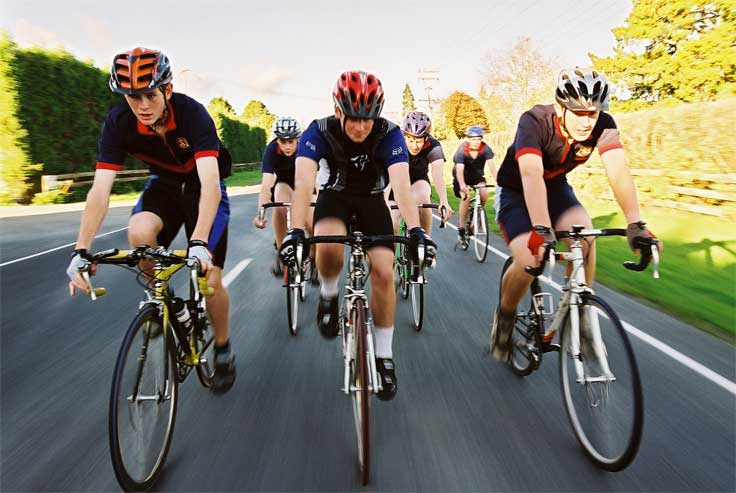
The easiest way to define traction is to bring the term back into its simplest forms. When you ride a bicycle just as I do, “traction” is the measurable force that directs power to the ground and in turn propels me towards a forward momentum within a given direction. Without traction or grip, the bike cannot go in a direction, will lose its momentum and will fail to reach its destination. The same could be said in the business of life. Output will always be the ultimate measure of effectiveness, and effectiveness is defined by your capacity to reach your goals. Simply put, going back to the analogy of the bike, “traction” indicates whether or not you are actually getting anywhere in life and business.

To understand the importance of traction, it is best to retrace the steps using the framework that is broadly described within the orders of: Input – Process – Output. At the end of this equation is a singular “Output or Outcome” which is a summary of a desired result. Taking it another step back within the realm of “Process” are subsets of objectives that are results of activities that need to be accomplished. Within this area of process and objectives are measurements of progress that are referred to as “traction”. Taking a further back in step is the realm of “Inputs” where resources are used to start the process. Here is a real life example to make things easier.

I am currently coaching a business led by a driven CEO named David who had his goal set on finishing an Iron Man (Triathlon Event) in Melbourne last March 23, 2014. While a goal of finishing a strong Ironman event may sound overly simplistic, seeing through a framework of Input-Process-Output puts the matter under a deeper perspective. The key here is having an end in mind but also the knowledge of breaking down your goal into smaller objectives, activities, smaller tasks, and material inputs. I usually teach a framework that a mentor also taught me when I was working for the International Labour Organization. It is called G.O.A.T., which stands for Goal, Objectives, Activities and Tasks. It helps you break down a goal into smaller manageable chunks. In this case the Goal is to finish a full Iron Man under 17 hours. The Goal broken down into a set of 3 sub-objectives would be to finish the 3.86 km swim within 2 hours and 20minutes, a 180.25 km bike ride within 8 hours and 10 minutes and a 42.2 kilometer run within 6 hours and 30 minutes.

Goals and Objectives are considered outputs and tracing things back, objectives are driven by processes and activities that are measureable. While David was racing in Melbourne, his friends were giving a minute-by-minute report online. David finished the first event, the swim leg within 1:13:09 and the bike leg within 5:18:09. With two legs out of three out of the way with measurable speeds way below the cut-offs we are almost sure of a very strong finish. This is what we refer to as “traction”

Traction is a measurement of progress and a Key Performance Indicator (KPI) that signifies that you will accomplish your goal or mission. In the end David finished the race strong with a few seconds above 11 hours. That is 6 hours below the cut-off.

Activities
You cannot get these types of outputs and traction overnight. The hours saved per leg are a composite of how much time was invested in training. The effects are in direct proportion to the amount of hours spent in the pool, on the bike, and inside your running shoes. The point is that time and traction are directly correlated. The amount of measureable performance that indicates traction is directly proportionate to the amount of time invested in training. This is the very reason why I love working with athletes. They know that strategic goals and objectives cannot be achieved without an investment of time and resource. According to BeginnerTriathlete.com, training for an Ironman event requires a cumulative of 20 weeks of training of up to 18 hours per week. That is approximately 360 hours of training for a 17-hour event.

Tasks
There are prerequisite inputs and “Tasks” such as taking the proper nutrition, managing your schedules, getting equipment and mental preparation. You also need to have the base fitness before getting into a rigorous training program.

The same could be said with any goal. You must understand the commitment, time and resource involved before reaching them and yes, all of these processes will take time. It takes about 2 hours for me to write an article such as this even before it gets to the editing phase for later publishing. Perhaps you’re looking at “running a marathon” to knock it off your bucket list, if you haven’t done a “half-mary” or worse, haven’t started running yet, and then perhaps you should start walking today? Perhaps you need to get a pair of running shoes first? Develop the Input-Process-Output mindset and after you’ve made up your mind, you can follow it through with the GOAT framework for planning.

While this may seem all personal and not much to do about business, then take another look. David runs a company that distributes some of the best brands known to endurance athletes such as Pinarello, Cervelo, and Felt Bicycles. He also distributes soft goods such as 2XU, Zoot, and Aquasphere goggles along with race nutrition and other performance gear. Being a competitive Ironman is actually very strategic for him. It gives him the personal brand profile advantage that he could use for his suppliers and customers. It pays dividends both in his personal brand equity and the company he runs. The passion and personal commitment that he attaches to his sport and his business gives him enormous credibility with the people he works with, as well as the brands that endorses. In my experience in working with him, I could truly say that he’s getting a lot of strategic traction but also because he puts in the time.

To learn more about these frameworks please feel free to follow and tweet me a message @JohnSBaybay or go to my website: square1coaching.com

Categories
Leadership Life Management

Courage is Never Having to Ask “What If?”

John Walter Baybay
03.12.14

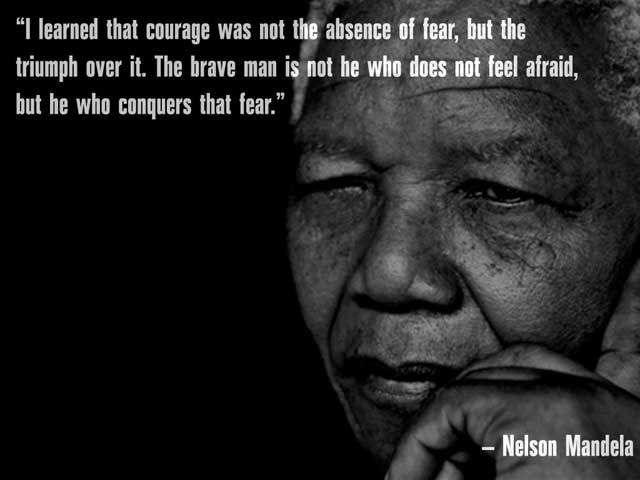
“Courage” seems to be a big word that many seem to misunderstand as something that applies to everyone. The mere mention of the word “courage” sends us conjuring images of action movies such as Brave-heart, 300 or perhaps The Lords of the Ring. It escapes many people to believe that great examples of courage do not require a film viewing or distant look into history. Most of what we know about courage is based on fantastic tales of adventure, battles and conquest. Unfortunately not much applies to how we live our lives everyday and perhaps the missing sense of adventure is what keeps our lives interesting enough for us to enjoy. The truth of the matter is that great examples of “courage” can be found simply by listening to the stories of our forebears.

In the early 60’s my mother left the Philippines on a plane bound for New Jersey (USA) to seek a better life as Registered Nurse. It was her first time to fly an airplane. She was 18 years old and alone. The experience must have been terrifying to think that those metal objects could actually fly. Terrifying to “not know” the life that awaits her when she lands. She got over it. She worked as a nurse for a few years, met someone and got engaged. She took another flight back to the Philippines to tell her parents about their plans. On a stopover from Narita-Japan to Manila, her story took a twist when she met a dashing gentleman who insisted on sitting next to her on the plane. Persistent as he was in getting her address, she resisted. When they landed she found her luggage missing, only to have the dashing debonair rush to her aid to assure her that she will get her luggage. He offered to take care of everything. He’ll use all of his contacts (being a hotshot executive) and get to the bottom of things and soon enough her luggage will be delivered to her house personally!

The luggage was found after a few days and the dashing debonair gentleman is at the front door of her house in a Buick Riviera to deliver it. They fell in love in a whirlwind romance. She broke off her previous engagement and never went back to the US until they got married in 1968. My father was the dashing debonair gentleman who later revealed to me that he had bribed the luggage handlers to keep my mother’s luggage so that he could get her address. The “other” man who my mother was supposed to marry was heard to have never married and went into depression and died lonely in Canada. Now I am writing this article and sharing it with thousands to honor her because:

Someone took the courage as a woman to think across borders and go beyond the norms. To get an education and to work abroad at the age of 18.
Someone took the courage to get on a plane, not knowing what kind of life awaits her when she lands.
Someone took the courage to fall in love. To follow her heart and build a life over again and so here I am…
Courage does not always have to look like blazing guns and flashing swords. Apparently “courage” seems more like a tipping point towards a difficult decision. It is easy to recognize courage with its brilliant displays, but it is more difficult to recognize in the moments where courage seems missing.

When I was in College in the US, I took a bus from the Eastside to the Upper Westside. Living on 1st Avenue, we were the 1st stop on the bus’ route. There was a girl I had a crush on and she got on at the 2nd stop every weekday and got off near Julliard near the Lincoln Center. I took the bus through an extra stop later than I had to just to see her get off the bus. That being my stop comes before hers. It was like that every day. I sat in the same spot just so I could sit across from her. I would have lingering thoughts of her even hours after she got off the bus. I would memorize how her hair looked and what she wore. As much as I wanted to engage her, I always thought to myself: perhaps tomorrow. School broke for the summer and I never saw her again. I said to myself, “someday”.

A few friends came over to the apartment on a Friday and told me to pack my stuff for a weekend in Fire Island. I went and as we were hanging out by the beach, the girl was there a few meters in front of me with her friends sun-bathing! I said to myself, that “someday” has arrived but I relented. I even gathered her name “Danielle” as her friends was talking to her. I told myself, I’d wait till her friends leave. The window opened! But alas! “Courage” was not there. Instead I found courage’s bedfellow: “fear”. The moment never happened again. Never again! And I found myself struggling with the question “what if?” Having “Courage” is never having to ask “What If”.

In 1996 I found myself in a situation that could only be described in today’s language as: “It’s Complicated”. I met a girl and fell in love, but she didn’t know it yet. This time I was not going to let the moment pass. I’ll make a move. Though I didn’t know what to say, I said I’ll write a letter to her instead. Write I did with a poem by Archibald McLeish “Not Marble Nor the Gilded Moments”. She didn’t get all the similes but I did get a date. We fell in love and got married. We have three kids and a home. This is what I learned from the second experience.

Courage is not the absence of fear but the ability to work through the fears and the accompanying anxieties that come with the situation of an unknown result. Courage is never having to ask “what if” and punching through the membrane to know the end results. Fear is present but with passion, desire, belief and experience, we can muster the courage to push our fears aside and penetrate the barriers that separate us from our desired future or result.

In 2001 I left the comforts of my father’s business to work with a UN Agency called the International Labour Organization. I worked under a Specialist on Enterprise Development helping young people get started in business through entrepreneurial training and financial support. It took a lot of courage for me to leave the family business into something unknown. But if I had not, I would not have the opportunity to travel to different continents to share my expertise. I would have never gotten the opportunity to look through hundreds of business plans per month and now teaching and coaching companies about planning. What was the feared unknown has turned into my career for thirteen years. I branched out from business planning, strategic planning, project management and economic planning.

There were times I had been taken to highly militarized zones and escorted by pick-up loads of armed men. Sometimes I flew in private planes! I have walked through the dark streets of the urban slums and the fecal matter riddled dirt streets of rural India where water was difficult to obtain. I have walked, advised and lectured in the highest boardrooms and I have walked 15 kilometers off-road across mountains for fieldwork. Sometimes having to go to the bathroom where there isn’t any. Each time, there was risk and fear. And each time it takes a little bit more “courage”.

With that I was invited to speak in front of a high-school class about courage, and for the first time in years I was afraid. It was a very unfamiliar audience and so I shared the very same stories I’m telling you today. A constant bedfellow fear is to courage, but here I am today telling you about it. Never have to ask “What If?” I owe it to my parents and my family who supported me through our life’s adventure and misadventure. Still a life worth lived with not too many moment of saying “what if”. Take courage along with the things you already have with you: talent, skill, encouragement, purpose, passion, and belief and you can live a life without regrets. Take inventory of what you have right now and some of those things that I said and build a plan based on it. You will find that courage is that final tipping point in making your most important decisions. Look back at where you came from, look at the things you have on hand, and then take courage to look forward into a life of adventure.

Categories
Uncategorized

Clichéd Critics’ Critics Criticisms and Other Yolanda Do’s and Don’ts

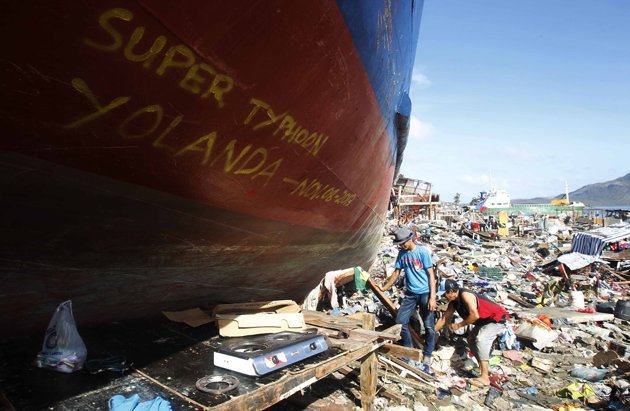
Sunday November 10, 2013 was Day 1 after Yolanda (International Name Haiyan) hit the Philippines with a cataclysmic super typhoon that decimated central Philippines especially Tacloban. The following day had already prompted my local church with a special offering for the victims. Most attendees including myself gladly obliged without much hesitation in opening their checkbooks to help their fellow kababayans in Leyte. At that point however, many still haven’t a full appraisal of the damage caused by the super cyclone. Nevertheless, we went back home trying to assess whether or not we could manage to finds some surplus clothing on top of the money we have already given. It comes to surprise, that we might not find too many old clothes in our closets. The country has seen so many storms and floods that most of our drawers’ contents have been “right-sized”.

It wasn’t until actual footage came in that a lot of us came to a full appreciation to the extent of damage that Yolanda caused. Previous social-media videos gave clips of unprecedented winds and shearing damage but the calm after the storm was even worse. Structures have been pulverized. Bodies were seen scattered behind reporters; people of all stature were left without house and home. The devastation was inconceivable. Even with previous storms, the country was left unprepared by the scale of Yolanda’s damage. It was clear that we needed to act fast though at that point, there were already criticisms that the government hasn’t acted fast enough. There were allegations that PNoy had tried to downplay the scale of damage to the international press. There were annoyingly comical clips of Mar Roxas directing traffic and there were unjustified fingers pointing to incapacity of the local government. They themselves were rendered “incapacitated” due to the magnitude of the disaster. While the rest of the world poured in their sympathies and support into Tacloban, the President denies tact and mercy to its Mayor who by default and by choice represents the devastated city.

With eyes on the victims, some of our friends in social media had asked for a ceasefire from criticism (One from my former boss Ms. Feliece Yeban). While I heeded to this call in propriety, the critics’ critics seem unrelenting with messages saying something to the effect of: “Well if you were the President, do you think you could’ve done a better job?” Have you heard this trite remark? “Well, perhaps if your have a better suggestion, maybe you could enlighten us. After all you seem so much smarter than all of us!” My absolute favorite has got to be: “Instead of criticizing what’s wrong with the relief effort, why don’t you help instead? Be constructive instead of divisive! Stop criticizing our government!” With these sneering and self-righteous remarks, you have to ask who it is that is being divisive.

By Day 4, I found myself instantly recruited to load relief goods into privately marshaled Land Rovers, delivery trucks and personal SUVs to the airport and back. In the background there was a massive operation in a Christian Church in Festival Mall where the assembly area was converted into a sorting and packing area with hundreds of volunteers. Private planes were being used to transport items to other areas such as Palawan. A bus company volunteered to provide ground transportation a Bike Shop provided bicycles and off-road vehicles from Muntinlupa to Tacloban and local logistics company provided the warehousing to keep the logistics smooth “free of charge”. (I can attest to who they are as witnessed, and can release this information upon consent). They are not the Epal types, just God loving citizens.

We have learned from the natural crises of the past but nobody could be 100% prepared for a disaster of this magnitude. While we could make ourselves feel better by riding along the positive waves of “neo-nationalism” and “keyboard heroics or bayanihan” and attacking those who are critically frustrated from the news they are getting on the ground. I have a simple message of Yolanda DOs and DON’Ts. (The Dos having been adapted from our Church’s mission Mantra of Pray, Give, Go!)

DO:
Pray – or if not, spare a thought for them. Without being religious or spiritual, thinking of other people’s needs first sets a good precedent to your succeeding actions, decisions and behavior. Thinking about them shapes the economic decision between getting a bottle of wine or instead putting a check in an envelope this Sunday for the victims.
Open up your checkbook or say it in cash! Nothing moves faster and longer in these times of crisis as good as money. Money needs no sorting operation and I believe it would be appreciated more than the information that you used to wear a size 42. Reserve that for you “Before” picture at the gym and there isn’t much use for your bacon gartered underwear either. Believe me, some people will sort through your old clothes.
Go! You don’t have to go to ground zero. As a matter of fact, you don’t have to go too far. A local church, Villamor or perhaps ahem a local NGO (most of which don’t have a bad rep for being bogus) would appreciate your help. Lend them your thoughts but more so, lend them a hand.

DON’T:
Don’t send stuff that you can’t use yourself. The same goes for old Garfield plushy that you stick to the back window of your car. I already mentioned clothes earlier. Please don’t send your old underwear and your 80’s neon ski-jacket. You’re not being generous when you send junk.
Don’t be “unheroic” by posting messages that you’re torn between getting a KTM or an Aprilia. You’re not being heroic, you just being an @$$#0!%. Refrain from foodporn and posting your P350.00 ramen with a tall glass of Sapporo on the side. Enjoy these things in private!
Don’t be Cliché and Holier than Thou with your pseudo nationalistic sneering. If you’re criticizing the critics, aren’t you also a critic? (Perhaps on the opposite side of the fence and in who’s defense?)

You can be helpful and be critical at the same time. You can give with one hand and be discerning with the other. Criticism uncovers many of the bitter truths that society tends to hide. We move further ahead if we base it on the truth. It doesn’t take half a dimwit to see the logistical bottlenecks in the relief effort, but you have to be critical to see what they really are. No finger pointing here, I’ll just use my mouth after all that’s what still makes me Pinoy.

Categories
Politics

Recollection on the First One Million People March: 4 Clues (4 P’s) as to Whether or Not We Are Actually Going Anywhere.

Political blogs are usually out of place within these corporate websites but also with an exception where it is meant to teach a valuable lesson in planning. Having worked with the Overseas Development Agencies (ODA) and in Economic Development planning for the past twelve years, I am no stranger to lofty ideals and Big Hairy Audacious Goals (BHAD) as the private sector would call them. In the Millennium Summit of the United Nations, a declaration of Eight Goals aptly called the Millennium Development Goals (MDGs), was stated and has become somewhat of a Magna Carta for all development work worldwide. These goals included: Eradicating Extreme Poverty, Achieving Universal Primary Education, Promote Gender Equality and Empowerment among seven others that I am short of mentioning in keeping this article brief. Lofty and ambitious as they may be, and though we may still be ways in achieving them, there is evidence of the work being implemented.

“Matuwid na Daan” likewise is one of those principal statements that also sound very ambitious. However it was one of those statements that we all bought into. Who doesn’t want the eradication of corruption once and for all? I even I took a vote to see that we get rid of it in our generation. However, last August 26, 2013 I found myself in Luneta to join the first One Million People March. I even wrote a blog about it entitled: “Pork Paybacks and Picnics”, with a follow-through entitled: “The Pork Ball from Different Angles”.

We are on another pork rally again. This one in Ayala and my constant question starting from the 1st one would be: “OK, where are we now? Are we moving somewhere?” Even with varying agendas from the moderates to those that want an ouster, I believe that everyone is in agreement for the abolition of the Pork Barrel. This agenda however doesn’t look like it is progressing. With a multitude of issues such as Zamboanga and even that of Napoles, how far are we in terms of getting the pork out of our system?

Going back to my Development Economist days, where I worked firstly in Programme Management, Design and later on to Policy, I developed this mental model called the 4Ps. 4Ps have nothing to do with marketing but does put a tracker on many of those audacious goals we often work with. 4Ps stand for Principle, Policy, Process and Procedure (in that order). It is something I developed for myself in terms of how these goals can be broken down from something that is seemingly ethereal into something real, tangible and we could all benefit from. Looking at the 4Ps gives many of us working in the private sector, a role in how we achieve the Vision of our organizations. Let’s look at Pork Barrel under the 4Ps perspective in its ordered steps.

  1. Principle: “Matuwid na Daan” is about eliminating corruption. If there is no corruption, there is no poverty. Corruption is evil and all its forms and its instruments should be eradicated.
  2. Policy: The Pork Barrel is a proven instrument for corruption. Therefore it must be abolished. We need to make a policy statement that it will be abolished within a specific timeline. A policy is a declaration of commitment that we will not stray away from the conclusion that we do not want this flawed practice to exist any longer.
  3. Process: We must identify a fair process that states the rules of engagement and identify the key stakeholders for seeing that the policy takes effect. There needs to be visible signs that the process for abolishment is taking place, starting with transparent debates on how the policy will be implemented by whom and by when. Processes need to have an endpoint or deadline for implementation.
  4. Procedure: The last step is execution or implementation. At this point orders need to be dispensed and all actors are taking part in the phase out of the Pork Barrel under the scrutiny of the public and policy makers.

With this we could see that we are not even in step number One (Principle). Therefore we still have ways to go before we could actually realize the idea or “principle” of “Matuwid na Daan”. With step One, the responsibility often lies with the leader who is often the looked upon as the custodian of national principle. He is responsible for setting things in motion and pushing the larger agenda down the steps towards tangible realization.

The same goes for any organization that aspires to achieve lofty ambitions. Certainly, people do need to roll up their sleeves and leaders need to stick to their principles through action rather than words with short expiration dates. Sincerity is measured by action, not by promises. For now I am standing between the moderates and those who demand an ouster. However I do believe that if a leader cannot live with his espoused principles, then he ought not to be leader anymore.

Categories
Uncategorized

Pork, Paybacks and Picnics

Pork, Paybacks and Picnics
John B.
8.27.13

Droves of tax-paying citizens flocked to Luneta and other public areas around the Philippines on Monday August 26, 2013 (coinciding with National Heroes Day) to protest the “Pork Barrel” scheme and allegations of corruption triggered by the recent exposure of P10-B Napoles Pork Barrel scam. The event was largely mobilized through the social media in recent days and resulted perhaps in a reasonably good show of force by concerned netizens. One of my companions Jp Fenix commented however that perhaps it shouldn’t have been dubbed the “One Million People March” with a risk that the event might not actually yield the targeted number. Perhaps it didn’t but perhaps it might be considered successful. I am waiting to see what happens in the next few days before I judge.

I was privileged to be in the company of seasoned reporters, who at first hand has witnessed and covered the Nation’s most significant democratic events in our history. While in the van, my companions were sharing field stories enriched with their personal takes on the events that shape our society today. As we came up to Plaza Ferguson in Ermita, the conversations toned down as we exited our van: Perhaps this from a sense of Déjà vu. The scene was very familiar, as not much from Ermita has really changed in decades.

We came up through the muddied fields leading to the Grandstand with open expectations though we were quite amused by the presence of a mixed group. There were the Hare Krishna, the KMU, lots of people on bicycles (a seemingly more organized force), and what we could guess as the online organizers of the march with their stage, big screen and entertainment. It was a mixed bag with a very open agenda loosely styled under the “Occupy Movement”. The agenda was very open and free flowing. Indeed with such a loose structure, those with their own distinct agendas were expected to take advantage. Standing from far away we might’ve witnessed the former Chief Justice Corona being booed as he exited. We were not sure if it was him. Jograd de la Torre made a comical rendition of Jesse J’s “Price Tag” and Jim Paredes sang an appropriate song though we thought he struggled a bit to find his voice in the beginning. So far those were the highlights of the morning. While it may seem uneventful, we should all be happy that nothing terribly wrong happened. It was peaceful and generally pleasant despite the constant punctuations of the somewhat comically awkward chant: “Oink, Oink, Oink, Oink!” This had me asking, OK what’s next?

Without the exciting drama we could at least see the “One Million People March” for what it is: A participative and democratic display of the people’s disdain over the pork-barrel issue. While pork was the common theme, I could not help but observe some of the later speakers’ attempt to steer the issue away from the government’s accountabilities. Statements such as: “We are not mad at the government, we are mad at corruption”, seem to be redirection messages planted by pro-administration speakers who were cordially given the floor. Would you have us believe that the rally isn’t about the pork? People have become too smart to see that they were not on the same side.

On the other hand there was perhaps an attempt by former CJ Corona to direct some support for him against the administration; an attempt that obviously failed. Other messages seemed a bit more “themed” along the pork issue however a clear direction as to what happens henceforth seem lacking. There were a number of suggestive voices but no clear and unified voice on how to move forward. Participative and democratic as it may be in “Occupy” fashion, the event showed no clear owners. This is perhaps is not a bad thing but also yields some rather ambiguous results. I believe the event to be a clear display of sentiment rather than purposed to make a strong demanding statement. We need to be clear in the type of results we want from government and how we want to see them happen. Let’s make clear statements rather than just expressing our sentiments. Beyond having our voices heard, lets be clearer with what we are actually trying to say. Do we want it supplemented, overhauled or merely repurposed? Are we calling for an immediate abolishment? If so, how are we to do it? These options were not clearly communicated during the march.

Déjà vu it wasn’t for my seasoned companions who have witnessed the EDSAs and the events that welled up to them. Clearly we have not reached a tipping point yet. Perhaps this could be the first among a series of other events? Perhaps it will progress? One thing is for sure for this writer, and this is the very reason why I went (beyond mere curiosity).

I believe that the Pork Barrel is flawed concept from the principle of keeping three separate, distinct and equal branches of government. The idea of having a presidential allotment that is distributed to lawmakers is wrong and corrupts the whole principle of checks and balances. The pork corrupts our democratic system by monetizing the flow of political capital. With much leant to the president by the local machinery during his campaign, much is owed in payback in the form of pork. I believe that it should be abolished. A dialogue between government and organized groups must quickly ensue to provide a clear roadmap to this demanded change. In my opinion The “Million People March” has little or nothing to do with Napoles and the P10-B scam, but rather more about the flawed, corruptible and ineffective system of discretionary allotments. While many would argue based on the merits of its design, the truth has been revealed that pork is often used to line the pockets of colluding perpetrators rather than being given to legitimate and deserving recipients. Can we really solve this systemic flaw by penalizing the NGOs (most of which could be legitimate) and other scapegoats? This crooked path must be straightened as promised but I am now starting to wonder if the administration might just be too politically indebted to do so. Let’s not allow them to do their pork paybacks with our money.

There are talks of another march in September 11 but until then I hope we could progress with a clearer strategy. Either way, I might be inclined to show up for the picnic.